
Project delivery environments are becoming increasingly complex—driven by evolving digital demands, tighter budgets, and rising customer expectations. As complexity grows, the role of the Client Delivery Office (CDO) has become critical.
At its core, the CDO ensures that strategy does not remain theoretical. It translates intent into execution, ambition into outcomes, and plans into measurable value.
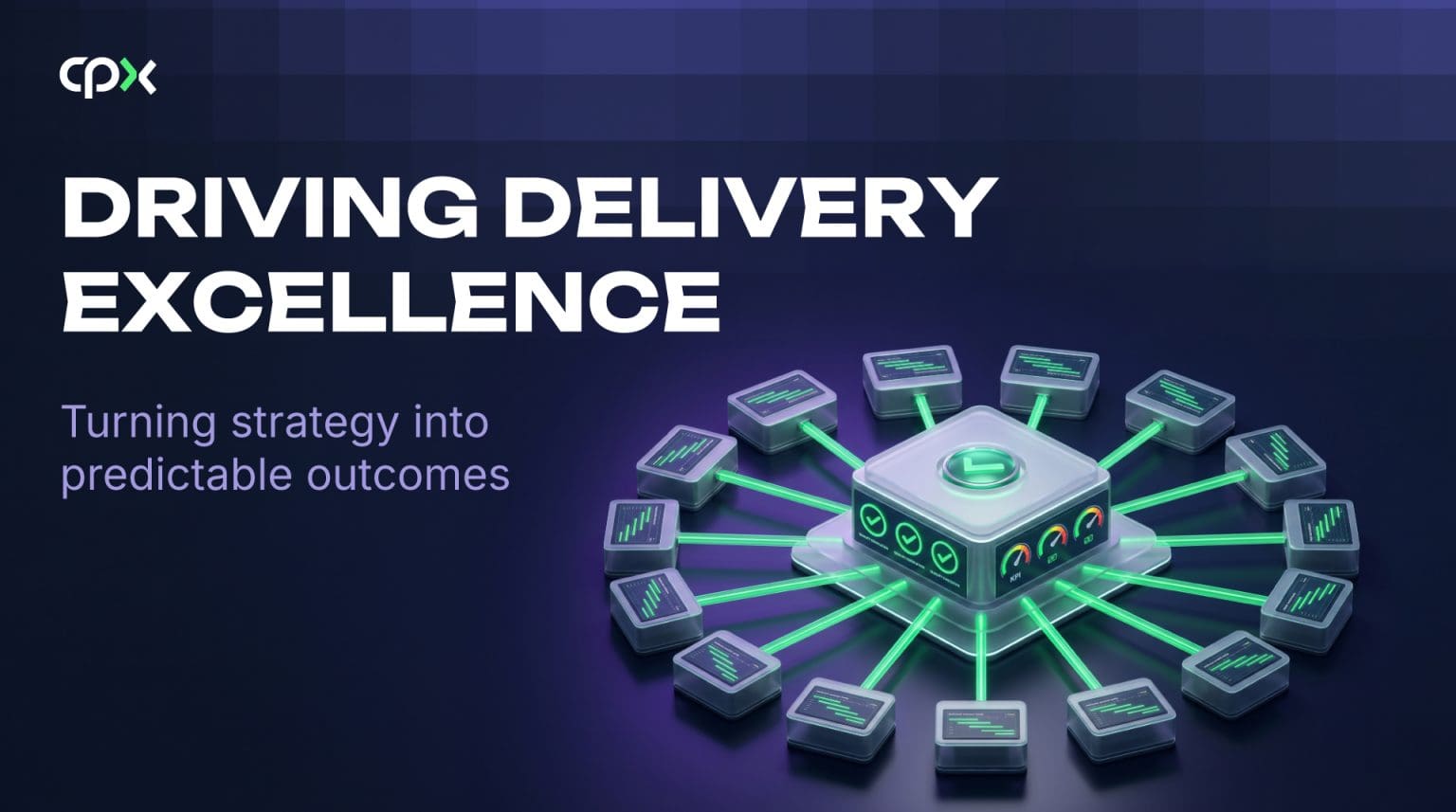
This blog explores how the CDO is driving delivery excellence through early engagement, embedding AI and AI‑assisted decision‑making, and continuous capability development.
Early PM engagement: Setting delivery up for success
One of the most impactful changes introduced has been the early involvement of Project Managers across the engagement lifecycle, before delivery formally begins. By embedding the delivery leadership team during pre‑sales and initiation, projects are set up correctly from the outset. This is when the most critical decisions around scope, assumptions, dependencies, delivery models, and risk posture are being made.
This CDO‑led “shift‑left” approach enables clearer expectations, smoother sales‑to‑delivery transition, and early risk mitigation. Significantly reducing downstream rework, escalation, and cost overruns. More importantly, it provides continuity and confidence for clients from day one, enabling sustainable long‑term value rather than short‑term delivery fixes.
Traditionally, PM involvement was concentrated in the delivery phase. Experience shows that embedding PM capability earlier leads to stronger outcomes, as risks are identified before they materialize, delivery models align to customer realities and handovers become seamless. As a result, delivery predictability improves, customer trust is strengthened, and cost leakage is reduced.
Embedding AI: Enabling smarter, faster delivery decisions
As delivery portfolios scale, relying solely on manual processes becomes increasingly inefficient and risky. The CDO has therefore placed a strong emphasis on embedding AI into delivery processes and leveraging AI‑assisted support to enhance decision‑making and delivery oversight.
Key focus areas include:
- Embedding AI to support governance, reporting, and delivery insights
- Reducing administrative burden on PMs, enabling greater focus on leadership and problem‑solving
- Using AI‑assisted analysis to identify delivery trends, emerging risks, and decision bottlenecks earlier
Rather than replacing human judgment, AI is embedded to augment delivery leadership, improving visibility, consistency, and speed across complex engagements. This enables Project Managers to move from reactive issue management to proactive delivery steering, improving predictability, and client outcomes.
Enterprise PM tooling: Turning data into delivery intelligence
Enterprise PM tools are often implemented with good intent but limited value realization. A core CDO priority has been ensuring these platforms are not simply repositories, but active enablers of delivery excellence.
The introduction of the newly acquired project operations tool has strengthened delivery oversight by standardizing how delivery data is captured and used. It enables:
- A single source of truth across programs and portfolios
- Informed, timely decision‑making for delivery leadership
- Improved forecasting accuracy and delivery predictability
- Consistent governance without slowing execution
The focus is not on tools for tools’ sake, but on ensuring that every data point captured directly supports better outcomes for clients, delivery teams, and the business.
Upskilling technical delivery PMs for complex engagements
Modern delivery demands more than generic project management. Many client engagements require PMs who understand security and technology‑specific constraints, regulatory and assurance requirements, third‑party dependencies, and complex multi‑stakeholder operating models.
The CDO continues to invest in upskilling technical delivery PMs, equipping them to operate effectively within specialized engagement contexts. This deepens collaboration with engineering teams, improves decision‑making, and leads to more efficient and resilient delivery.
Looking ahead: Delivery as a strategic differentiator
The Client Delivery Office is not simply a governance or oversight function; it is a strategic enabler of client success and business confidence. By shaping delivery earlier, strengthening decision‑making, and embedding the right capabilities at the right stages, the CDO ensures that client engagements are set up for success from inception through execution and beyond.
Through early delivery leadership, embedded AI‑assisted insight, strengthened PM capability, and pragmatic governance, the CDO is building a delivery ecosystem that is resilient, scalable, and deeply client‑centric. This approach improves predictability, protects value, and enables delivery teams to operate with greater clarity and confidence in increasingly complex environments. As we move through FY26, the focus remains clear for the CDO: to drive predictable outcomes, protect client and business value, and ensure delivery excellence underpins every strategic ambition