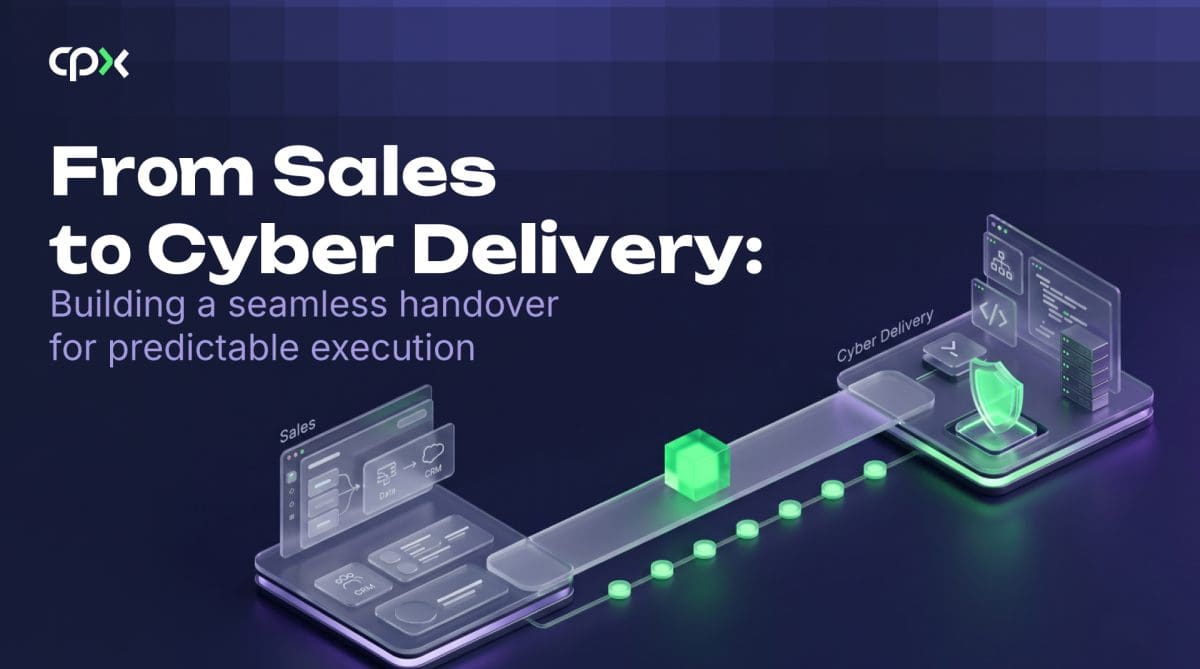

Most cybersecurity failures don’t begin with advanced attacks or zero-day exploits. They begin with avoidable delivery mistakes — missed assumptions, delayed escalations, unclear ownership, and poorly coordinated execution.
In cybersecurity projects, delivery is never neutral. Every overlooked dependency or unresolved risk can quietly expand the client’s attack surface and increase operational exposure.
In this blog, we explore five common cybersecurity delivery mistakes that can undermine operational resilience, compliance readiness, and long-term security outcomes.
1. Assuming the client understands cyber terminology
Cybersecurity is dense with acronyms, vendor-specific language, and overloaded terms. SOC, SIEM, EDR, SOAR, threat hunting, soft monitoring, use cases… These phrases often mean different things to different stakeholders.
A common delivery failure is assuming shared understanding. Clients may nod along in meetings while interpreting terms through an IT, compliance, or procurement lens – very different from how delivery teams intend them. The result?
- Misaligned expectations
- Incorrect scope assumptions
- Late-stage disagreements about “what was actually included”
Risk impact: When terminology isn’t clarified early, controls may be deployed incorrectly, responsibilities misunderstood, and gaps only surfaced during incidents or audits.
What good looks like:
- Define cyber terms in plain language
- Repeat definitions at key milestones
- Confirm understanding in writing, not just in meetings
Clarity is not condescension; it is risk reduction.
2. Ignoring compliance timelines and regulatory audit cycles
Cybersecurity projects don’t exist in isolation. They sit inside regulatory calendars: ISO audits, UAE IA requirements, internal governance reviews, and annual attestations.
One of the most damaging delivery mistakes is planning purely around deployment milestones while ignoring external compliance timelines. This leads to painful scenarios:
- A SOC goes live two weeks after an audit
- Evidence is requested that the project hasn’t been structured to produce
- “Temporary” workarounds become audit findings
Risk impact: Even technically sound solutions can be labeled non-compliant if timing and evidence don’t align. This creates reputational, contractual, and regulatory exposure.
What good looks like:
- Map delivery milestones against audit cycles
- Plan evidence generation as a deliverable, not a by product
- Treat compliance deadlines as immovable risk constraints
In cybersecurity delivery, when something is delivered can matter as much as what is delivered.
3. Deploying tools before processes are defined
Tool-first delivery is one of the fastest ways to create operational fragility. SIEM platforms, EDR solutions, and SOAR tools are powerful, but without defined processes, they become expensive dashboards rather than security controls.
Common symptoms:
- Alerts without ownership
- Playbooks that don’t reflect real decision making
- Analysts improvising response actions under pressure
Risk impact: Tools without process maturity increase alert fatigue, delay incident response, and create false confidence while real risks remain unmanaged.
What good looks like:
- Define detection, triage, escalation, and response processes first
- Clarify roles and decision authority
- Then configure tools to support those workflows—not the other way around
Cybersecurity maturity is built on process discipline, not tool count.
4. Underestimating third party dependencies
Modern SOC and cyber programs are ecosystem based. They depend on:
- Log sources and feeds
- Cloud provider permissions
- Third-party EDR, firewalls, and identity platforms
- External vendors and internal IT teams
A frequent mistake is treating these dependencies as minor or “easy to integrate later.” In reality, third-party dependencies are often the largest delivery risk drivers:
- Access approvals take weeks
- Data formats don’t match expectations
- SLAs between vendors don’t align
Risk impact: Delayed integrations weaken visibility, create blind spots, and postpone operational readiness—sometimes long after contractual go live.
What good looks like:
- Identify dependencies during initiation, not deployment
- Assign owners for each dependency
- Actively track third-party readiness as a critical path item
If your SOC can’t see the data, it can’t defend the environment.
5. Delaying risk escalation “to keep things calm”
This is the most dangerous mistake on the list and the most human one. Delivery teams often delay escalating risks to avoid:
- Client anxiety
- Executive attention
- Difficult conversations
The intent is stability. The outcome is accumulated risk. Small issues become normalized:
- “We’ll fix it later”
- “It’s not blocking yet”
- “Let’s not escalate for now”
Until one day, it is blocking—or worse, it becomes a security incident.
Risk impact: Delayed escalation removes options. What could have been mitigated early becomes damage control later.
What good looks like:
- Escalate risks early and factually
- Separate risk visibility from blame
- Treat transparency as a trust building tool, not a threat
In cyber delivery, calm achieved through silence is temporary—and costly.
Project managers in cybersecurity are risk owners
Cybersecurity project managers are not just schedulers or coordinators. They sit at the intersection of technology, compliance, operations, and client accountability.
Every decision to clarify—or not.
Every risk escalated—or postponed.
Every assumption challenged—or accepted.
All of these shape the client’s security posture long after the project closes.
Before your next milestone, review your last project:
- Which risks did you normalize instead of addressing?
- Which assumptions went unchallenged?
- Which escalations came too late?
Because in cybersecurity delivery, unmanaged delivery risk eventually becomes security risk.