
In Part 1, we examined how cloud platforms, SaaS, artificial intelligence, DevSecOps, end-user computing, and digital ecosystems are distributing cyber risk ownership and cybersecurity accountability across internal and external stakeholders. Even where responsibilities are formally defined, accountability can still weaken in practice.
Four common accountability challenges
Organizations may have mature cyber policies, risk registers and assurance programs, yet accountability failures can still emerge in practice. As ownership becomes distributed across business functions, technology teams, cyber-risk functions, suppliers and platform providers, weaknesses tend to appear in four recurring forms: constrained challenge, blurred responsibilities, governance bottlenecks and delayed assurance.
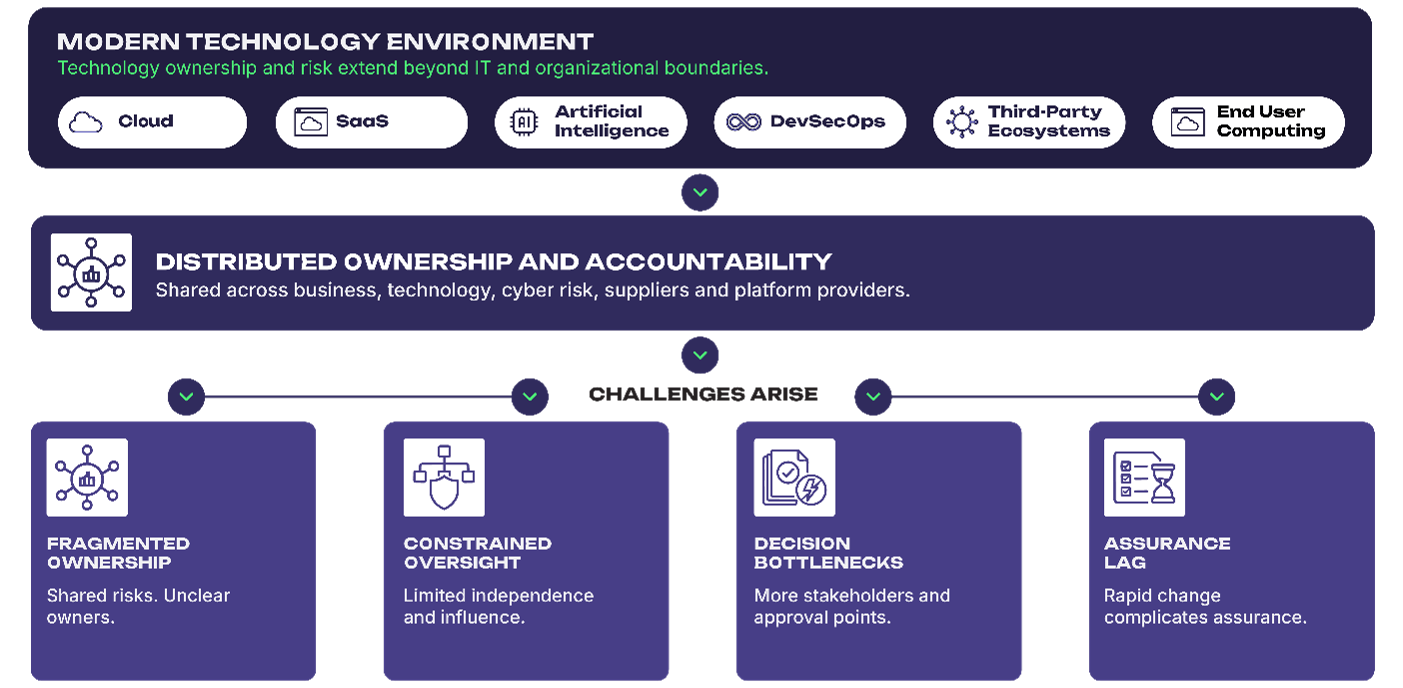
Figure 1: How modern technology creates new accountability challenges
Scenario 1: When security cannot challenge technology
- The CISO reports solely through IT
One of the most frequently debated governance questions concerns the positioning of the Chief Information Security Officer (CISO).
In many organizations, the CISO reports directly to the Chief Information Officer (CIO), often with limited direct interaction with executive leadership, risk committees, or the board. While this structure may improve operational alignment, it can also create situations where the security function becomes dependent on the same function it may need to challenge.
The concern is not necessarily the reporting line itself. Many organizations successfully operate with a CISO reporting through technology leadership. The challenge emerges when risk escalation becomes constrained by delivery priorities, budget pressures, or technology objectives.
Organizations do not necessarily need to redesign reporting structures. In highly regulated or public-sector environments, reporting lines may be fixed by legislation or operating mandates. What matters is ensuring that the CISO can challenge decisions and escalate significant risks. A formal cybersecurity steering committee comprising business, technology, security, and risk leaders can provide a structured forum for resolving accountability gaps, tracking remediation, and escalating decisions. Independence is not purely about reporting lines. It also depends on access, authority and the ability to escalate.
Scenario 2: When the referee starts playing the game
- The Second Line performs First-Line activities
Another increasingly common challenge emerges when governance and risk functions begin performing operational work.
Cyber governance, risk or compliance teams may begin administering security tools, implementing technical controls, managing privileged access, owning vulnerability remediation activities, or operating security processes because operational teams lack capacity.
The arrangement may initially appear efficient, but over time the Second Line becomes both operator and reviewer, weakening its ability to assess controls objectively.
In smaller organizations, some overlap may be unavoidable. The solution is not pretending separation exists. Organizations should clearly document control ownership, formally define where operational and oversight responsibilities begin and end, and introduce compensating mechanisms such as risk committee oversight, independent assessments, external reviews, or targeted internal audit activity to preserve objectivity where separation is constrained.
Scenario 3: When governance becomes the bottleneck
- Controls slow response instead of enabling it
Cybersecurity professionals constantly balance two core objectives: ensuring appropriate governance and oversight while responding rapidly to emerging risks and threats.
Problems arise when governance structures designed to reduce risk inadvertently increase exposure by delaying action.
A critical, actively exploited vulnerability is identified in an internet-facing system. Technical teams are ready to deploy the remediation, yet implementation becomes dependent on multiple approvals, committee reviews, risk sign-offs, change windows, and business confirmations.
Collectively, these requirements may delay action during precisely the period when attackers are actively exploiting the vulnerability.
Large organizations often face this challenge, where multiple governance stakeholders review the same issue, creating coordination overhead that can inadvertently delay remediation.
Organizations should establish pre-approved emergency pathways that define when First-Line teams can act immediately, how Second-Line oversight is maintained in real time, and how Third-Line assurance reviews decisions retrospectively. Effective governance should enable speed with accountability.
Scenario 4: When assurance arrives too late
- Audit finds the problem after the environment has changed
The Third Line remains essential because it provides independent assurance over governance effectiveness, risk management activities, and control performance.
The challenge is that traditional audit cycles may not always keep pace with rapidly changing technology environments.
In many organizations, cyber audits are performed according to established audit plans. By the time findings are reported, the infrastructure, cloud environments, applications, and technologies under review may have already changed substantially.
This creates a situation where assurance remains accurate but arrives too late to influence critical decisions.
Organizations can supplement planned audit activity with targeted, risk-based, and time-sensitive reviews, particularly following major incidents, cloud transformations, AI deployments, recurring control failures or significant technology changes. Assurance remains independent while becoming more relevant to operational reality.
The good news is that these challenges do not mean the Three Lines Model is obsolete. Rather, they demonstrate that organizations cannot implement cybersecurity governance using a one-size-fits-all approach.
Four accountability challenges and practical responses
The four scenarios point to different weaknesses, but each requires a clear governance response:
| Accountability challenge | Impact | Practical response |
| Security cannot challenge technology | Material cyber risk may not receive objective consideration or timely escalation | Define escalation thresholds, provide direct access, and establish a formal governance forum |
| Second Line performs First-Line activities | Ownership blurs and independent challenge weakens | Assign formal First-Line ownership and introduce compensating independent review |
| Governance becomes the bottleneck | Exposure continues while approvals are pending | Establish pre-approved emergency pathways and retrospective review |
| Assurance arrives too late | Findings may no longer reflect the current environment | Use targeted, risk-based, and event-driven assurance |
Conclusion: Effective governance starts with clear accountability
The Three Lines Model may be more important today than ever before. However, it was never intended to be a compliance exercise or an organizational chart. Its purpose has always been to create clarity around ownership, challenge, and assurance.
The organizations that succeed will not be those with the most committees or the most elaborate governance structures. They will be the organizations that can clearly answer three simple questions:
- Who owns the risk?
- Who challenges the decision?
- Who independently verifies that controls are working?
When those answers remain clear, governance becomes an enabler of resilience rather than a documentation exercise.
In an era defined by cloud platforms, artificial intelligence, digital ecosystems, and relentless technological change, clear accountability may be the most important cyber control of all.
Clear accountability requires deliberate design. Organizations can strengthen the operation of the Three Lines Model through seven practical actions:
Seven practical actions to strengthen accountability
- Assign individual accountability for cyber risk: Name an executive owner responsible for the treatment, escalation and monitoring of each material cyber risk.
- Define decision rights: Clarify who decides, who acts, who challenges and who formally accepts risk.
- Preserve independent challenge: Give cyber and risk functions the authority to challenge decisions and escalate material concerns.
- Enable governance at the speed of risk: Predefine emergency thresholds and expedited decision pathways without bypassing oversight.
- Assure controls proactively: Add targeted reviews following incidents, major changes or recurring control failures.
- Establish clear escalation pathways: Route unresolved material risks to executives and governance forums before decisions become irreversible.
- Extend accountability beyond organizational boundaries: Define ownership, oversight and assurance requirements for suppliers and critical technology dependencies.
CPX helps organizations translate Three Lines principles into practical cybersecurity governance through operating-model design, cyber risk and compliance programs, and independent cyber audit and assurance.
Speak to CPX about strengthening accountability across your cybersecurity operating model.
Explore the full series