

10 March, 2026

Cyberattacks are becoming increasingly frequent and sophisticated, and their consequences now extend beyond organizations to affect individuals at a personal level, including job and financial loss.
At the same time, the rapid adoption of increasingly complex technologies, including OT/ICS, greater interconnectivity, widespread use of cloud-based services, and near real-time security monitoring demands a far more proactive approach to enhancing an organization’s cyber resilience posture.
In reality, no single solution fits all organizational needs, and the myth of the “one‑man band” has proven to be just that—a fairy tale. These realities place organizations in a challenging position. Organizations are required to make numerous executive‑level decisions across the cybersecurity spectrum to meet fast‑paced operational and regulatory obligations. In other words, defending digital ecosystems against evolving cyber threats is a complex task, with cybersecurity expected to act as a key enabler for secure operations and scalable growth.
For these reasons, organizations increasingly rely on Trusted Advisors, often engaging them in the capacity of an Advisory CISO or a vCISO. The following table provides a brief top five key differentiators across the spectrum of responsibilities when it comes to trusted advisors, especially between the two roles mentioned above, to enable organizations to make informed decisions.
This article aims to clarify how Trusted Advisor roles can add value to organizations, and why they are often a highly cost‑effective option.
Table 1 - Top-five key differentiators across the spectrum of Trusted Advisors’ responsibilities
|
|
Trusted Advisors |
|
|
|
Advisory CISO (CISO as a Service) |
vCISO |
|
Engagement |
Mostly for smaller periods of time (whenever specialised consultancy is required), usually seen acting in an “ad-hoc” capacity as deemed necessary. It may sometimes require a retainer. |
Usually for longer periods of time, (from two days per week, to fully dedicated), acting either as complimentary to the existing InfoSec/Cybersecurity practice, or assigned to establish/execute the cybersecurity program (or any certain functions) |
|
Focus |
Usually brought in to either provide guidance to any cybersecurity initiative the organization is undertaking (or planning to undertake) while advising the existing established teams, or provide industry insight on how the organization should shape, structure, enhance their cybersecurity team/efforts. | A holistic view and review of the cybersecurity program, across all functions and verticals. Acting as the dedicated go to expert (consultant) to accelerate the existing strategy/vision, working closely with the cybersecurity team and the already appointed cybersecurity executive (e.g., CISO) |
|
Win-Win |
Specialized consultancy services whenever these are required, that can be extremely cost effective to the organization | A significant accelerator to the cybersecurity program (existing or need to be set up), a results driven approach to uplift holistically the current cybersecurity posture and operations, a highly cost-efficient framework of having high-end consultancy services using an OPEX model |
|
Cyber Hygiene |
Make swift decisions to challenging problems while avoiding time-consuming and costly mistakes, by utilizing prior expertise that comes from across the industry the organization is operating within | Clear visibility in the overall cyber maturity and risk appetite of the organization, understanding of the cybersecurity culture, identification of pain-points, and introducing smart KPIs in alignment with the strategy, vision, and enterprise risk |
|
Under a Cyber Lens |
A fresh point-of-view to demystify cyber operations and cyber resiliency initiatives | Deep dive into the cyber resiliency initiatives with a clear cybersecurity mindset, identify unknown risks including any potential conflicts of interest |
With that in mind, this article presents actionable guidance to help executive leadership self‑assess and select the right type of trusted advisor. It is important to note that Trusted Advisor services can be delivered either as white‑labelled support or through full ownership of the appointed role for the duration of the engagement.
There has been a lot of debate regarding the set of attributes of a seasoned Chief Information Security Officer (CISO). The truth is that the role (and its responsibilities) is evolving faster than most would admit. The role increasingly demands a balance of business acumen, leadership capability, communication skills, and technical understanding.
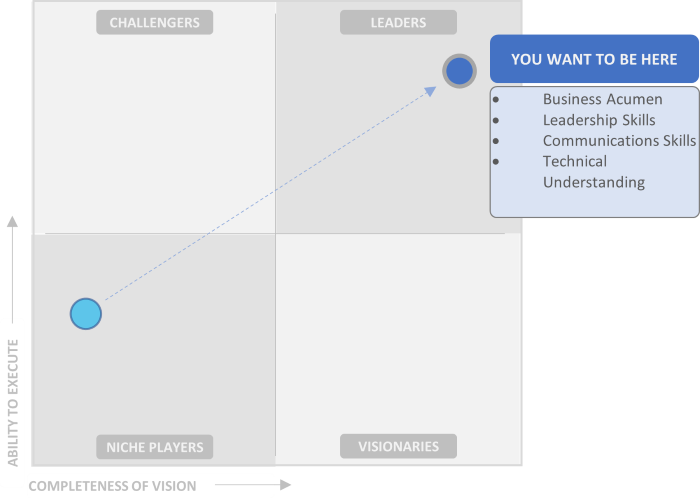
Figure 1 – Trusted Advisor attributes contributing to the cybersecurity leadership quadrant.
One of the main reasons this quadrant of attributes is true and necessary is that it is paramount for a cybersecurity executive to be in the position to make informed decisions based on valid inputs. These decisions in their entirety are responsible for ensuring that a whole organization is operating securely, fully aligned to the organization’s strategy, vision, and current/future needs.
There have been many examples, especially those deriving from high-profile data breaches, where it became evident that the responsibility for securing an organization was often misinterpreted as being a constant tick-box exercise to meet minimum compliance requirements.
Before diving into the specifics, it is important to emphasize that this article helps organizations self‑assess how they:
Even for organizations with a CISO (or those looking for a CISO), numerous emerging challenges require multi-discipline expertise. This is where the role of the Trusted Advisor (as outlined earlier on) comes into play to act either complementary to the existing practice or shape an approach as necessary until the right team is appointed to it. Sometimes during a transition process, or during the phase where an organization is looking to hire a full-time CISO, and there is a need for someone to act in that capacity until the hiring process is complete.
Trusted advisor roles allow decision-makers and thought-leaders to examine, evaluate and future-proof their cybersecurity initiatives, implementation, and execution, by bringing in specialized expertise to save the organization time and be cost-effective.
For that reason, the role and responsibilities of the cybersecurity executive lead (e.g., CISO) are divided below into three phases, allowing boardroom decision-makers to compare and contrast their existing cybersecurity initiatives and set expectations.
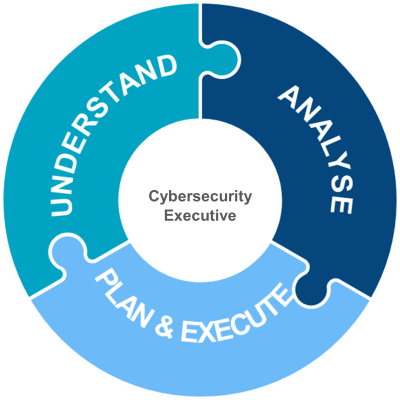
Figure 2 – Cybersecurity Executive’s three-phase roles and responsibilities approach
From day one, the industry/sector the organization is operating within should be taken into consideration. The cybersecurity lead (e.g. CISO) is expected to be all-hands-on-deck in understanding the existing threat surface. They are expected to bring guidance on what, where, and how the organization needs to be protected, especially regarding any industry/sector-specific cyber threats that can be devastating to the organization.
This involves significant effort, which must be structured rather than ad hoc to avoid reactive “fire‑fighting.” Despite what the theory in an ideal scenario says, there are many cases where starting with a security assessment might not be very effective without understanding the actual environment (digital ecosystem) that they are supposed to protect. There is no silver bullet when it comes to cybersecurity. These heterogeneous initiatives are where a vCISO, supported by a team of experts, can deliver outcomes in a fraction of the time.
The first phase is to understand the overall environment of the organization using a twelve-step approach and build upon each step as necessary. A CISO should meet with key stakeholders, request certain inputs, review documents and participate in governance meetings to be up to speed on how security is integrated with the organization. Some of the critical areas that the existing CISO (or acting trusted advisor) should engage in understanding are:
When certain essential elements are missing based on the above exercise, e.g., specific information security policy(ies), make a note of it to be included in your to-do list.
Once a fundamental understanding exists of the overall environment, the current state of the information security within the organization and the possible gaps with enterprise strategic plans need to be analyzed. This analysis would require a review of prior assessment reports, inputs from key stakeholders and outputs coming from the participation of the various governance committees. This phase comprises a seven-step approach to break down the workload and assign responsibilities to get the right (and up-to-date) inputs:
After analyzing the current security posture and identifying any possible security gaps, the final phase would be to formulate and execute a seven-step approach to address these gaps and reach the target state in alignment with the enterprise strategy. Ensure that your plan considers and aligns with the information security budget or communicates clearly to the board what adjustment is needed to the budget, ensuring that any budget increase can be justified.
Every cybersecurity executive bearing the responsibility of driving, leading and executing a cybersecurity program, is expected to be actively involved in various day-to-day operational activities. Some of these activities require specialized skillset that might not be available within the existing capabilities of the Information Security Department or Cybersecurity function of the organization.
Benchmarking against industry peers is a good indicator of where the organization is currently standing and where it should aim to reach (and of course within what timeframe). This is where specialized Trusted Advisor roles, such as the vCISO, can significantly reduce time‑consuming execution, misdirected initiatives, costly mistakes, low‑value tasks, and uncoordinated security operations.
We are already helping various entities accelerate their cybersecurity posture, programs and compliance, across the UAE. We look forward to having a chat with you today on how we could potentially help you.
Reach out to CPX to discuss our Trusted Advisor program and how it can support your organization’s strategic cybersecurity initiatives.

06 March, 2026
The Big Shift: Demystifying Cyber Agentic AI (CA2)
Read now
25 February, 2026
Identity and Access Management in the age of AI and autonomous ag...
Read now
05 February, 2026
From Reactive to Autonomous: The rise of Agentic AI in cybersecurity
Read now
03 February, 2026
Risk prioritization in today’s evolving cyber threat landscape
Read now
14 January, 2026
Cybersecurity in 2026: Why identity, AI, and trust will define th...
Read now
21 November, 2025
Red Teaming vs. VAPT: Choosing the right test for stronger cyber ...
Read now
13 November, 2025
Compliance isn’t security: The hidden risks of a checkbox approach
Read now
29 October, 2025
GraphQL Abuse: The silent killer in API security
Read now
22 October, 2025
Securing DevOps: A GRC perspective on agility, assurance and secu...
Read now
08 October, 2025
How SOCaaS can power transformation and foster innovation in GCC
Read now
26 September, 2025
Why is red teaming a must for OT systems
Read now
19 September, 2025
UAE cybercrime statistics 2025: Key data and trends
Read now

17 September, 2025
Cyber Risk Management: Qualitative vs. Quantitative Approaches
Read now
10 September, 2025
Why AI-powered SOCs are the future of cyber defense
Read now
03 September, 2025
How AI is transforming cybersecurity and threat detection
Read now
29 August, 2025
AI vs Hackers: Who is winning the cybersecurity arms race
Read now
28 August, 2025
Why every cybersecurity team needs document version control
Read now
27 August, 2025
AI agents in cybersecurity: Your new virtual SOC team
Read now
21 August, 2025
Securing Operational Technology: Challenges and best practices
Read now
17 July, 2025
Red Teaming in cybersecurity: Why thinking like a hacker matters
Read now

21 May, 2025
What is a SCIF? Inside the CPX Secure Compartmented Information F...
Read now
21 April, 2025
Cybersecurity in the UAE: What CISOs must prioritize today
Read now
18 March, 2025
The critical role of trusted advisors in OT cybersecurity
Read now
14 February, 2025
AI Agents: The new arsenal CISOs need
Read now
27 January, 2025
Make your AI work right: A framework for secure and ethical AI
Read now
14 January, 2025
Revolutionizing SOC efficiency: The power of cyber-physical integ...
Read now

20 November, 2024
The Modern CISO Playbook: Top priorities for CISOs in 2025
Read now
30 August, 2024
Ask the Right Questions to Get Data Privacy Compliance Right
Read now
29 December, 2023
Navigating Cyberspace in 2024: A Sneak Peek into the Top Security...
Read now
14 December, 2023
Top systems integration challenges every organization must prepar...
Read now
29 August, 2023
Help ! My Facebook has been hacked
Read now

20 July, 2023
Security Product Research in the Lab: A fair chance to prove your...
Read now

20 July, 2023
The Cyber Security Conundrum: Balancing Ego and Expertise
Read now

20 July, 2023
The Internet Never Forgets
Read now

20 July, 2023
Top Cloud Security Risks and How to Address Them
Read now

20 July, 2023
Why Continuous Education, Training and Awareness are Essential fo...
Read now
02 May, 2023
A 5-Star Partner: Priming Your IT and Security Services for Success.
Read now

02 May, 2023
AI and Cybersecurity: A Tale of Innovation and Protection
Read now

02 May, 2023
How to Select a Secure Cloud Model, One Size Does Not Fit All
Read now

02 May, 2023
Making Sense of Public Ratings in Product Selection Process
Read now

02 May, 2023
Privacy Compliance: A Four-Step Approach
Read now

02 May, 2023
Securing Your Website – Gaining Online Customers’ Trust
Read now
©CPX 2026. All rights reserved. Privacy policy | Terms of use