

25 February, 2026
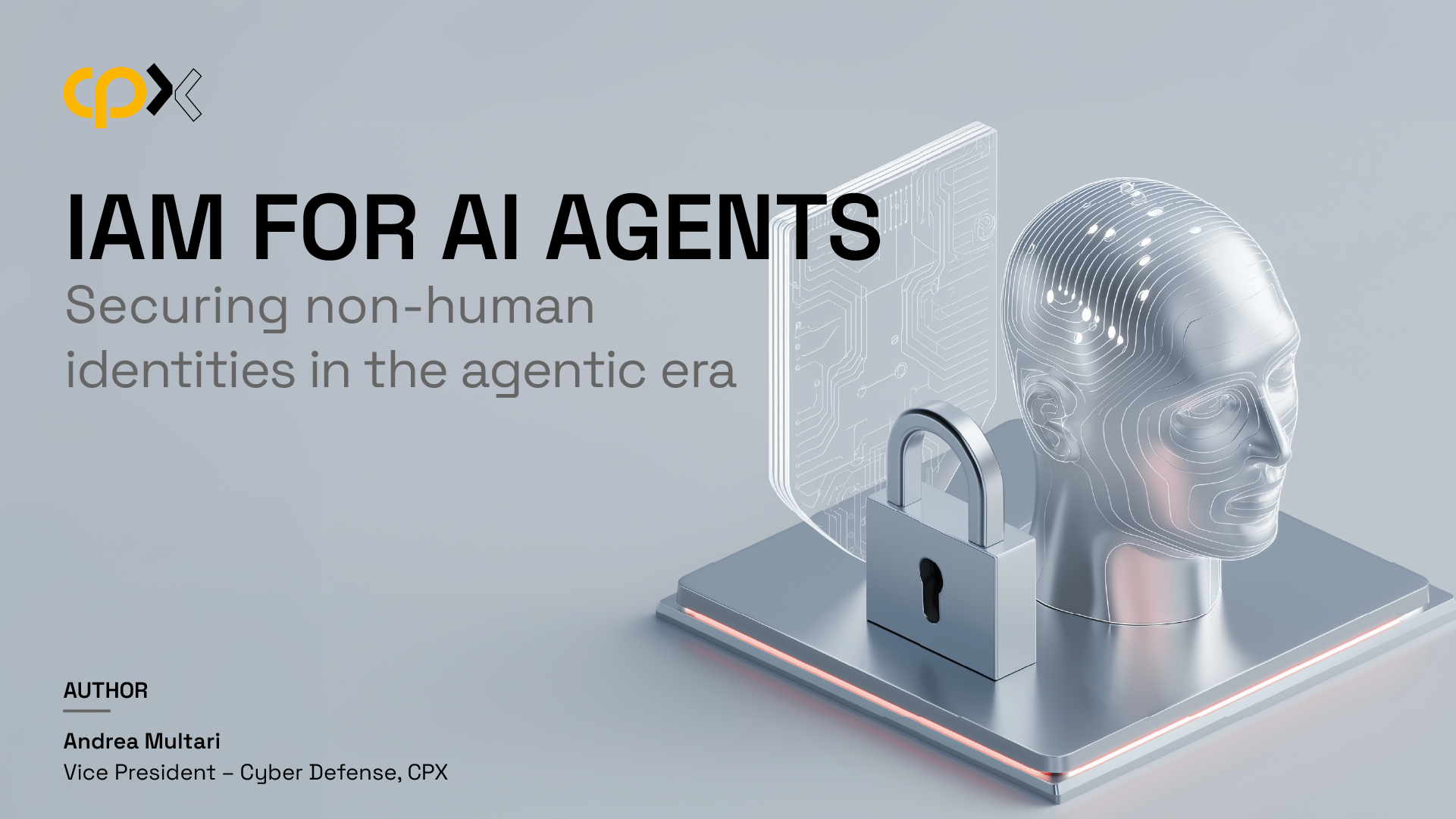
When your newest “employees” are autonomous agents, Identity and access management (IAM) becomes the control plane—not the checklist.
For years, IAM programs were built around a familiar cast: employees, contractors, partners, and customers—each with a reasonably predictable lifecycle.
But as automation and AI accelerate, the majority of activity inside modern environments increasingly comes from non-human identities (NHIs): service accounts, service principals, API keys, tokens, bots, workloads, and now agentic AI—autonomous agents that can plan, call tools, and take action across systems.
This shift changes the security equation because an agent doesn’t just “access” data—it can operate systems, chain actions, and amplify mistakes or compromise at machine speed. Furthermore, the speed at which NHI and related privileges need to be provisioned/de-provisioned is exponentially higher than with human identities, when individual organizations might develop thousands or millions of agents in short timeframes.
The uncomfortable truth is that IAM didn’t get simpler in the AI era—it became more foundational.
When an identity can spin up in seconds, persist indefinitely, and act without a human in the loop, the question “who can do what” becomes “what is this agent allowed to do, for whom, and under what conditions—and can we prove it later?”
Traditional governance assumes identities map to people and HR records, but NHIs and agents are often created dynamically by platforms, pipelines, or teams—leaving unclear ownership and inconsistent deprovisioning.
This mismatch is why many organizations struggle to apply human-centric identity governance processes (like periodic access reviews) to NHIs that don’t follow joiner–mover–leaver patterns.
NHIs frequently authenticate with long-lived secrets (client secrets, API keys, embedded tokens), which sprawl across source code, CI/CD, configs, and integrations.
As AI agents proliferate, they can multiply this problem by generating or using credentials at scale, making discovery, rotation, and revocation harder than ever.
Agentic AI often performs actions on behalf of a user, sometimes across multiple systems and sessions, which demands stronger guardrails for delegated authority and consent.
Standards discussions already highlight that common patterns (e.g., OAuth-based flows) can work in simpler scenarios but become strained in cross-domain, asynchronous, or multi-user delegation contexts.
For agents, auditors (and incident responders) need to connect: who invoked the agent, what it attempted, what access it received, what it touched, and what changed.
That’s fundamentally different from classic “user logged in at 10:03” logs—because autonomy and tool-chaining require accountability across a decision trail.
Here’s the good news: the pillars of IAM haven’t changed—authentication, authorization, least privilege, governance, and audit still form the backbone.
The OpenID Foundation’s work on agentic identity frames the challenge as familiar IAM fundamentals applied to a new class of actors and trust boundaries.
Zero Trust guidance remains equally relevant: “never trust, always verify,” evaluate context, and enforce access close to the resource—because identity is the primary attack path.
In fact, agentic AI strengthens the case for IAM as the policy engine for everything—human, workload, and agent—because you can’t “network perimeter” your way out of autonomous actions.
Treat agents as first-class identities with owners, purpose, environment, and lifecycle state, aligning with emerging platform approaches that make agent identities visible in the directory.
Add continuous discovery for “shadow” agents and OAuth grants to prevent unmanaged sprawl from becoming your blind spot.
Replace long-lived API keys and embedded secrets with federated workload identity and short-lived tokens wherever possible.
This reduces blast radius and makes rotation/revocation operationally realistic at the scale agents demand.
Scope permissions to the smallest set of actions and datasets needed, and separate high-risk actions (write, admin, money movement, production change) behind step-up controls.
Where possible, standardize access through templates/blueprints so agent instances don’t become snowflakes that no one can audit.
For “on-behalf-of” actions, require explicit approval or policy escalation when an agent crosses predefined risk boundaries, aligning with agentic IAM frameworks focused on delegation and traceability.
Your goal is simple: autonomy for low-risk tasks, friction for irreversible or high-impact ones.
Log the chain: invoker → prompt/intent → policy decision → credentials issued → tool calls → resources accessed → changes made → teardown.
This gives you the defensible story you’ll need for incident response, regulatory expectations, and board-level accountability as agent use expands.
In the AI era, identity is no longer a perimeter gate—it’s the runtime control plane for humans, workloads, and agents.
Agentic AI doesn’t replace IAM; it stress-tests it—forcing visibility, secretless authentication, least privilege, continuous governance, and auditability to operate at machine speed.
Organizations that modernize IAM for agents will move faster with less risk, because they’ll be able to answer the only question that matters when autonomous systems act inside your environment: “Was this action authorized, appropriate, and accountable?”
To modernize IAM for AI, agents, and non‑human identities, reach out to us and we will help you design identity‑centric security architectures that scale with your AI roadmap.

05 February, 2026
From Reactive to Autonomous: The rise of Agentic AI in cybersecurity
Read now
03 February, 2026
Risk prioritization in today’s evolving cyber threat landscape
Read now
14 January, 2026
Cybersecurity in 2026: Why identity, AI, and trust will define th...
Read now
21 November, 2025
Red Teaming vs. VAPT: Choosing the right test for stronger cyber ...
Read now
13 November, 2025
Compliance isn’t security: The hidden risks of a checkbox approach
Read now
29 October, 2025
GraphQL Abuse: The silent killer in API security
Read now
22 October, 2025
Securing DevOps: A GRC perspective on agility, assurance and secu...
Read now
08 October, 2025
How SOCaaS can power transformation and foster innovation in GCC
Read now
26 September, 2025
Why is red teaming a must for OT systems
Read now

19 September, 2025
UAE cybercrime statistics 2025: Key data and trends
Read now

17 September, 2025
Cyber Risk Management: Qualitative vs. Quantitative Approaches
Read now
10 September, 2025
Why AI-powered SOCs are the future of cyber defense
Read now
03 September, 2025
How AI is transforming cybersecurity and threat detection
Read now
29 August, 2025
AI vs Hackers: Who is winning the cybersecurity arms race
Read now
28 August, 2025
Why every cybersecurity team needs document version control
Read now
27 August, 2025
AI agents in cybersecurity: Your new virtual SOC team
Read now
21 August, 2025
Securing Operational Technology: Challenges and best practices
Read now
17 July, 2025
Red Teaming in cybersecurity: Why thinking like a hacker matters
Read now

21 May, 2025
What is a SCIF? Inside the CPX Secure Compartmented Information F...
Read now
21 April, 2025
Cybersecurity in the UAE: What CISOs must prioritize today
Read now
18 March, 2025
The critical role of trusted advisors in OT cybersecurity
Read now
14 February, 2025
AI Agents: The new arsenal CISOs need
Read now
27 January, 2025
Make your AI work right: A framework for secure and ethical AI
Read now
14 January, 2025
Revolutionizing SOC efficiency: The power of cyber-physical integ...
Read now

20 November, 2024
The Modern CISO Playbook: Top priorities for CISOs in 2025
Read now
30 August, 2024
Ask the Right Questions to Get Data Privacy Compliance Right
Read now
29 December, 2023
Navigating Cyberspace in 2024: A Sneak Peek into the Top Security...
Read now
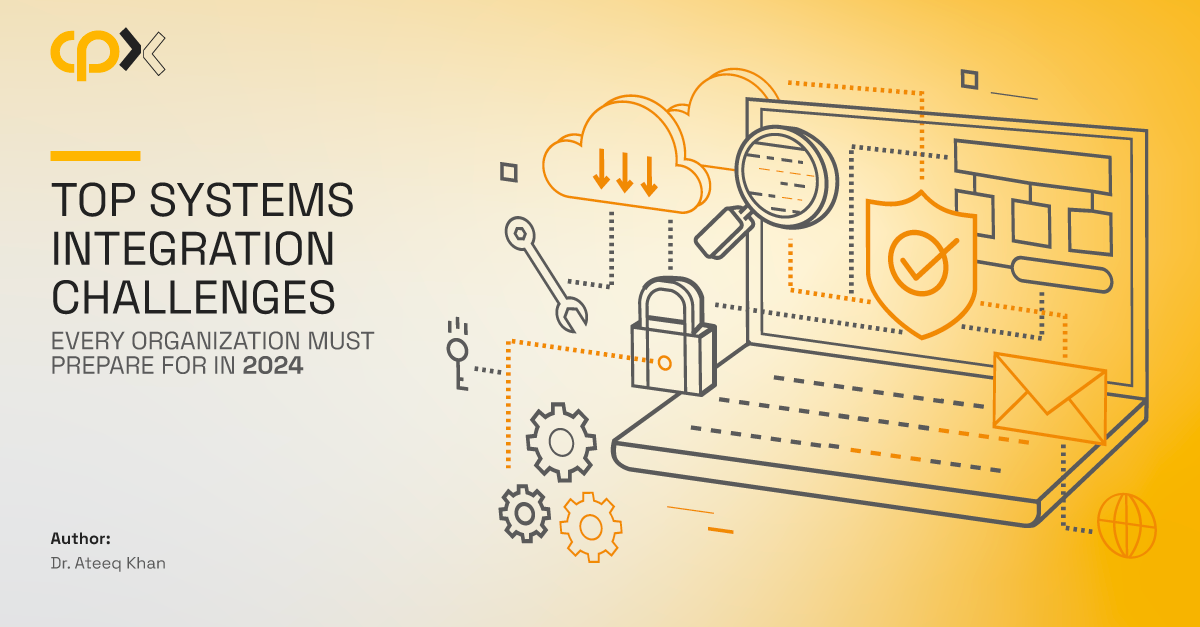
14 December, 2023
Top systems integration challenges every organization must prepar...
Read now
29 August, 2023
Help ! My Facebook has been hacked
Read now

20 July, 2023
Security Product Research in the Lab: A fair chance to prove your...
Read now

20 July, 2023
The Cyber Security Conundrum: Balancing Ego and Expertise
Read now

20 July, 2023
The Internet Never Forgets
Read now
20 July, 2023
Top Cloud Security Risks and How to Address Them
Read now

20 July, 2023
Why Continuous Education, Training and Awareness are Essential fo...
Read now
02 May, 2023
A 5-Star Partner: Priming Your IT and Security Services for Success.
Read now

02 May, 2023
AI and Cybersecurity: A Tale of Innovation and Protection
Read now

02 May, 2023
How to Select a Secure Cloud Model, One Size Does Not Fit All
Read now

02 May, 2023
Making Sense of Public Ratings in Product Selection Process
Read now

02 May, 2023
Privacy Compliance: A Four-Step Approach
Read now

02 May, 2023
Securing Your Website – Gaining Online Customers’ Trust
Read now
©CPX 2026. All rights reserved. Privacy policy | Terms of use