

27 March, 2026
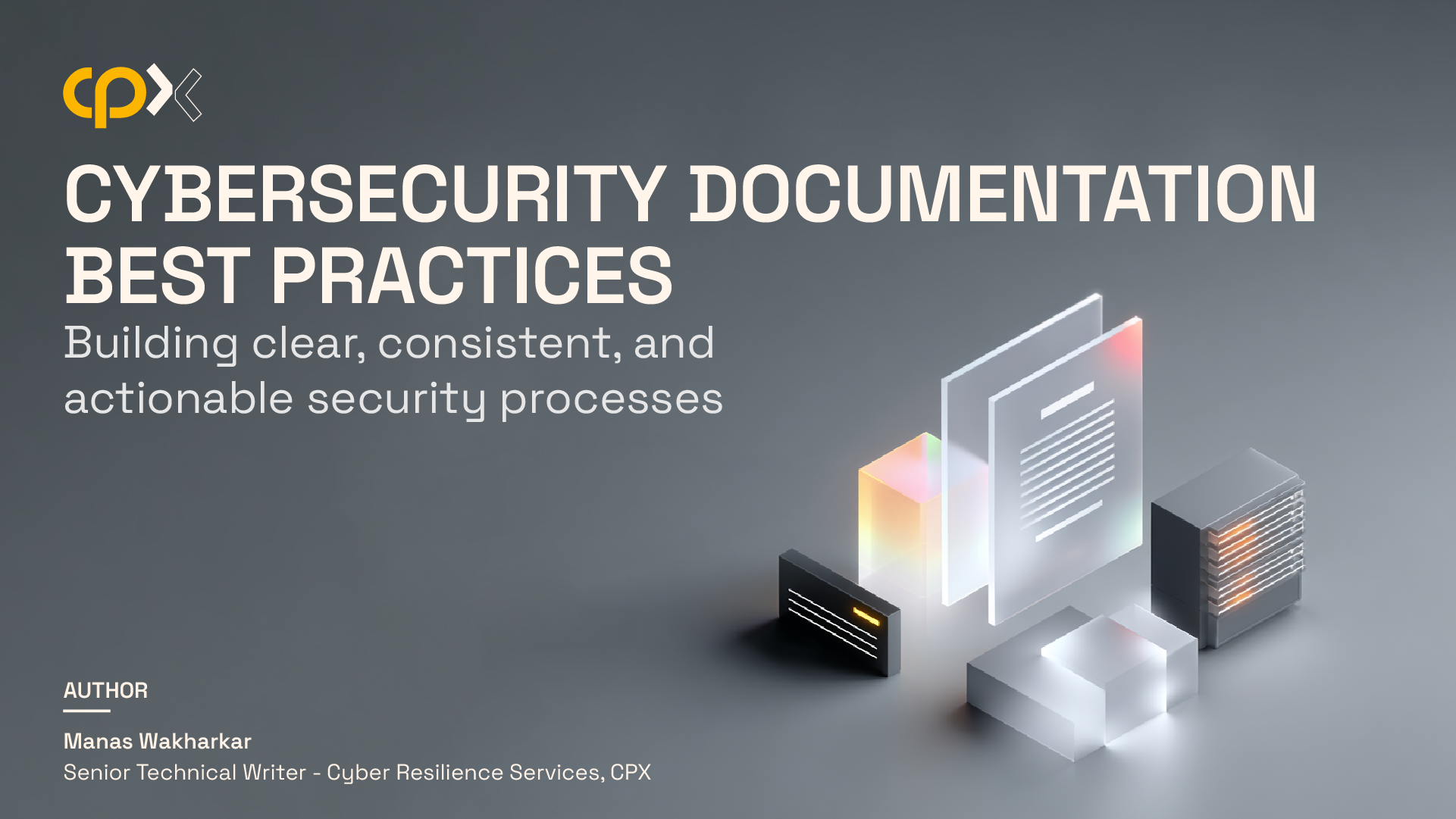
Considering the increasing cyber threats, security risks, and uncertainties, in today’s threat landscape, cybersecurity teams face constant pressure to identify, detect, analyze, respond and recover from incidents swiftly. While cybersecurity tools and technologies play a vital role, one often overlooked foundation is security documentation.
The reality is, when cyber incidents or attacks strike, the quality of your cybersecurity documentation is what matters the most. It can either make a difference and enable a swift response or create confusion.
At times, organizations are found struggling with poor or inconsistent security documents for the cyber teams. Outdated documents, runbooks, playbooks, and incident response plans with vague instructions or missing details not only increases risk exposure but also slow down teams to manage the incidents.
This elaborate blog will explore and explain why effective and updated security documentation is required for cyber teams and what the best practices are to write them. Let’s also look at crucial steps to create effective security documentation that helps your engineers and security analysts to identify and manage the possible threats.
Security documents guide the cyber teams in many ways:
Here are some of the benefits of having clearly written security documents:
When cybercriminals move in milliseconds, clear documentation gives your defenders or security teams an edge.
Some common mistakes to avoid in security documentation include:
These mistakes lead to delayed responses, higher risks and compliance issues during active attacks. Thus, they are to be avoided!
To make security documents truly effective for cyber teams, certain elements are to be taken into consideration:
These elements transform cyber documents from being just ‘paper compliance’ to a breathing resource.
Here are some tips to create effective security documents for cyber teams:
Effective security documentation is basic hygiene for cyber teams. By creating and maintaining clear, updated, precise, and accessible resources, the organization can:
At CPX, our cyber teams help organizations develop and maintain structured, practical security documents tailored to their environment. From creating incident playbooks, incident response plans and other security documents, to establishing version-controlled workflows, we align all your documents with compliance requirements and operational resilience.
Contact our cybersecurity experts today and know more about how to create effective security documents for your cyber teams.

26 March, 2026
The Big Shift: Making cyber agentic AI (CA2) safer – Governance, ...
Read now
10 March, 2026
vCISO vs. Advisory CISO: How to choose the right Trusted Cybersec...
Read now
06 March, 2026
The Big Shift: Demystifying Cyber Agentic AI (CA2)
Read now
25 February, 2026
Identity and Access Management in the age of AI and autonomous ag...
Read now
05 February, 2026
From Reactive to Autonomous: The rise of Agentic AI in cybersecurity
Read now
03 February, 2026
Risk prioritization in today’s evolving cyber threat landscape
Read now
14 January, 2026
Cybersecurity in 2026: Why identity, AI, and trust will define th...
Read now
21 November, 2025
Red Teaming vs. VAPT: Choosing the right test for stronger cyber ...
Read now
13 November, 2025
Compliance isn’t security: The hidden risks of a checkbox approach
Read now
29 October, 2025
GraphQL Abuse: The silent killer in API security
Read now
22 October, 2025
Securing DevOps: A GRC perspective on agility, assurance and secu...
Read now

08 October, 2025
How SOCaaS can power transformation and foster innovation in GCC
Read now
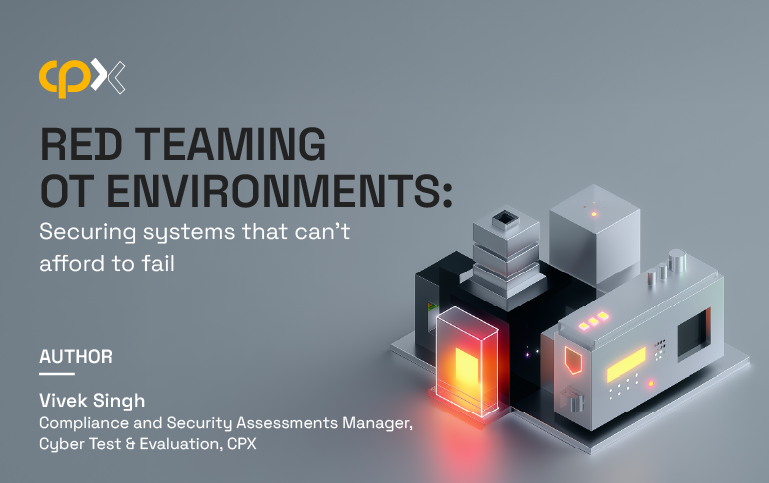
26 September, 2025
Why is red teaming a must for OT systems
Read now

19 September, 2025
UAE cybercrime statistics 2025: Key data and trends
Read now

17 September, 2025
Cyber Risk Management: Qualitative vs. Quantitative Approaches
Read now
10 September, 2025
Why AI-powered SOCs are the future of cyber defense
Read now
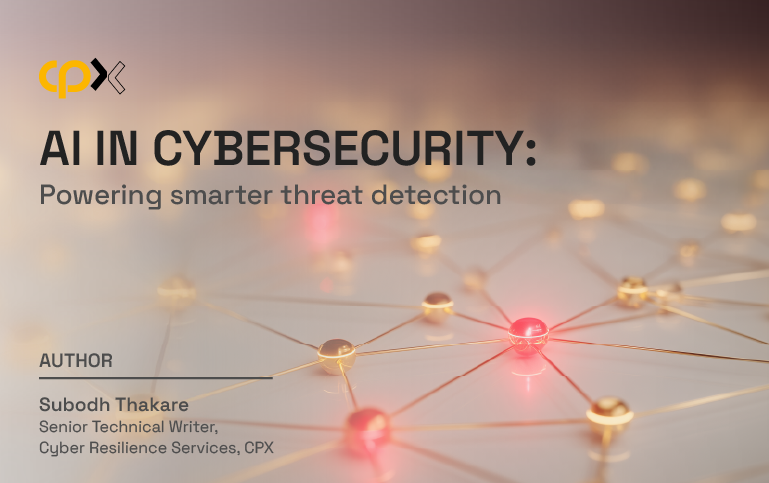
03 September, 2025
How AI is transforming cybersecurity and threat detection
Read now

29 August, 2025
AI vs Hackers: Who is winning the cybersecurity arms race
Read now
28 August, 2025
Why every cybersecurity team needs document version control
Read now
27 August, 2025
AI agents in cybersecurity: Your new virtual SOC team
Read now

21 August, 2025
Securing Operational Technology: Challenges and best practices
Read now
17 July, 2025
Red Teaming in cybersecurity: Why thinking like a hacker matters
Read now

21 May, 2025
What is a SCIF? Inside the CPX Secure Compartmented Information F...
Read now
21 April, 2025
Cybersecurity in the UAE: What CISOs must prioritize today
Read now
18 March, 2025
The critical role of trusted advisors in OT cybersecurity
Read now

14 February, 2025
AI Agents: The new arsenal CISOs need
Read now

27 January, 2025
Make your AI work right: A framework for secure and ethical AI
Read now
14 January, 2025
Revolutionizing SOC efficiency: The power of cyber-physical integ...
Read now

20 November, 2024
The Modern CISO Playbook: Top priorities for CISOs in 2025
Read now
30 August, 2024
Ask the Right Questions to Get Data Privacy Compliance Right
Read now

29 December, 2023
Navigating Cyberspace in 2024: A Sneak Peek into the Top Security...
Read now
14 December, 2023
Top systems integration challenges every organization must prepar...
Read now
29 August, 2023
Help ! My Facebook has been hacked
Read now

20 July, 2023
Security Product Research in the Lab: A fair chance to prove your...
Read now

20 July, 2023
The Cyber Security Conundrum: Balancing Ego and Expertise
Read now

20 July, 2023
The Internet Never Forgets
Read now

20 July, 2023
Top Cloud Security Risks and How to Address Them
Read now

20 July, 2023
Why Continuous Education, Training and Awareness are Essential fo...
Read now
02 May, 2023
A 5-Star Partner: Priming Your IT and Security Services for Success.
Read now

02 May, 2023
AI and Cybersecurity: A Tale of Innovation and Protection
Read now

02 May, 2023
How to Select a Secure Cloud Model, One Size Does Not Fit All
Read now

02 May, 2023
Making Sense of Public Ratings in Product Selection Process
Read now

02 May, 2023
Privacy Compliance: A Four-Step Approach
Read now

02 May, 2023
Securing Your Website – Gaining Online Customers’ Trust
Read now
©CPX 2026. All rights reserved. Privacy policy | Terms of use