

07 April, 2026
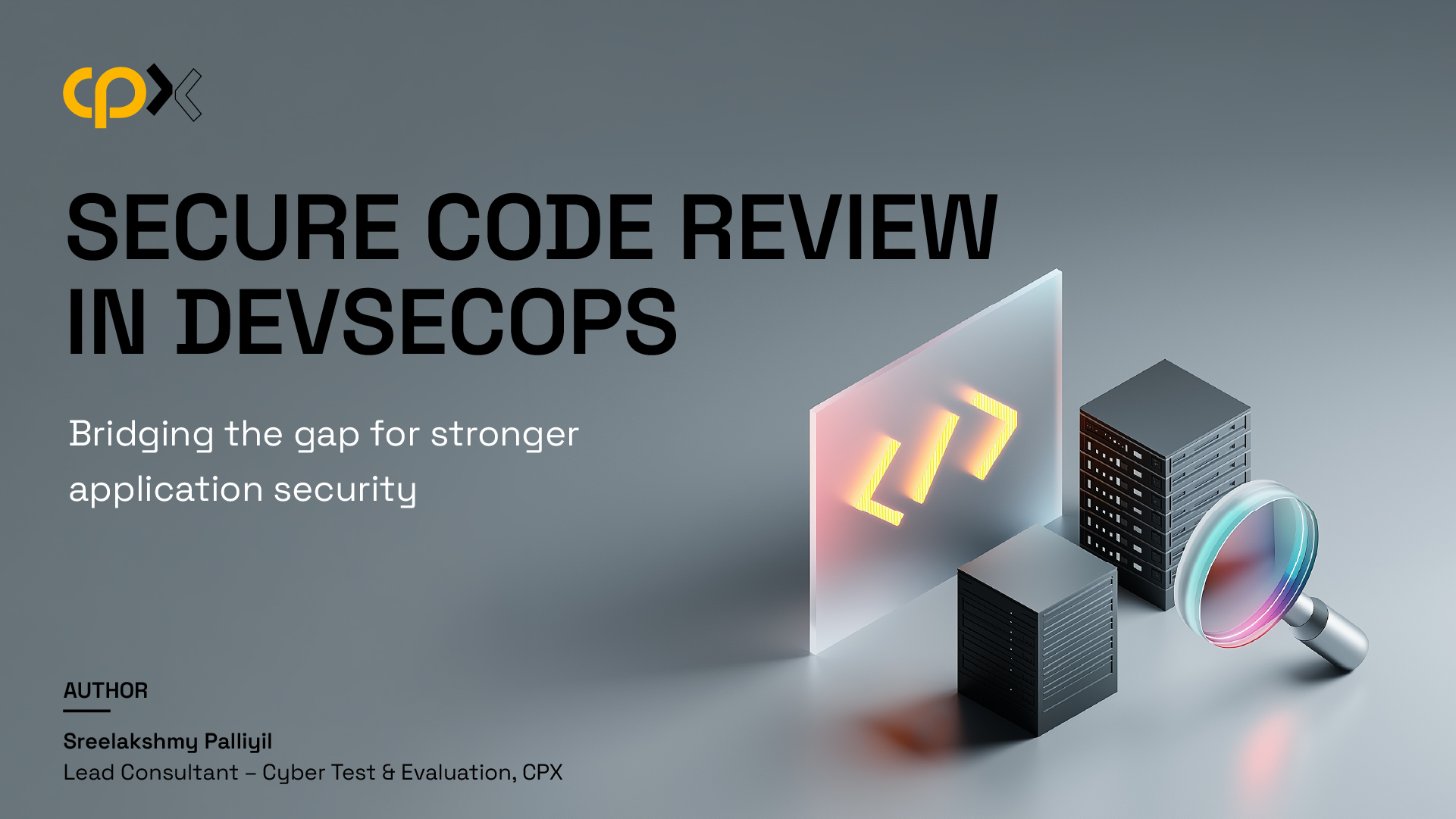
Software is no longer delivered in months—it’s released in days. But as delivery speeds increase, secure coding practices, application security hygiene, and risk-aware development often fall behind. DevSecOps aims to fix this by embedding security into the software development lifecycle (SDLC)—yet one critical gap remains: secure code review.
Secure code review sits between speed and security. When treated as a manual or late-stage activity, vulnerabilities are identified too late, remediation becomes costly, and the risk of security breaches increases.
The real opportunity is to make secure code review continuous, automated, and fully embedded into DevSecOps pipelines—without slowing innovation.
Secure code review isn’t just another step; it’s a vital way to embed resilience directly into the source code. The notorious breaches over the last decade from supply chain attacks to data leaks can often be traced back to lapses in code quality, security controls, and software vulnerability management.
Here are some key reasons why secure code review continues to be relevant in modern pipelines:
Now before plunging into strategies for integration, let’s understand why it’s been hard for secure code review to scale quickly in the rapid DevOps environments:
This generally leaves developers viewing security as a hurdle rather than help. And to change this around, secure code reviews need to be more transparent, automated, and empowering.
Step 1: Move left with automation
Step 2: Focus on peer code reviews with security in mind
Step 3: Integrate security into CI/CD workflow
Step 4: Use machine learning for context-aware reviews
No technological solution can compensate for a deficient security culture. Even the most advanced automated code review tools will falter if developers perceive security as the responsibility of others.
To build a developer-driven security culture, consider:
As we see more AI-driven development, secure code review will encounter new challenges:
The combination of DevSecOps, automation, AI and manual analysis will make secure code review smooth, proactive, and almost invisible. Security will become a driver of innovation, not an afterthought.
Bridging the gap between secure code review and DevSecOps is all about integration, automation, and empowerment. By seamlessly embedding review processes into CI/CD pipelines, encouraging peer accountability, and using AI-driven security tools, organizations can quickly deliver software without sacrificing security.
The message is clear: secure code review isn’t a bottleneck; it’s a key to resilience. In a landscape where threats are constantly evolving, incorporating security at the code level ensures that every release is not just quicker, but also safer.

07 April, 2026
Security Performance Measurement: From compliance to confidence –...
Read now
07 April, 2026
Security Performance Measurement: From compliance to confidence –...
Read now
02 April, 2026
Cyber in hybrid conflict: The new invisible frontline
Read now
30 March, 2026
How to write threat models that engineers actually use for strong...
Read now
27 March, 2026
Cybersecurity Documentation: Best practices for SOC, IR and secur...
Read now
26 March, 2026
The Big Shift: Making cyber agentic AI (CA2) safer – Governance, ...
Read now
10 March, 2026
vCISO vs. Advisory CISO: How to choose the right Trusted Cybersec...
Read now
06 March, 2026
The Big Shift: Demystifying Cyber Agentic AI (CA2)
Read now
25 February, 2026
Identity and Access Management in the age of AI and autonomous ag...
Read now
05 February, 2026
From Reactive to Autonomous: The rise of Agentic AI in cybersecurity
Read now
03 February, 2026
Risk prioritization in today’s evolving cyber threat landscape
Read now
14 January, 2026
Cybersecurity in 2026: Why identity, AI, and trust will define th...
Read now
21 November, 2025
Red Teaming vs. VAPT: Choosing the right test for stronger cyber ...
Read now
13 November, 2025
Compliance isn’t security: The hidden risks of a checkbox approach
Read now
29 October, 2025
GraphQL Abuse: The silent killer in API security
Read now
22 October, 2025
Securing DevOps: A GRC perspective on agility, assurance and secu...
Read now
08 October, 2025
How SOCaaS can power transformation and foster innovation in GCC
Read now
26 September, 2025
Why is red teaming a must for OT systems
Read now

19 September, 2025
UAE cybercrime statistics 2025: Key data and trends
Read now

17 September, 2025
Cyber Risk Management: Qualitative vs. Quantitative Approaches
Read now
10 September, 2025
Why AI-powered SOCs are the future of cyber defense
Read now
03 September, 2025
How AI is transforming cybersecurity and threat detection
Read now
29 August, 2025
AI vs Hackers: Who is winning the cybersecurity arms race
Read now
28 August, 2025
Why every cybersecurity team needs document version control
Read now
27 August, 2025
AI agents in cybersecurity: Your new virtual SOC team
Read now

21 August, 2025
Securing Operational Technology: Challenges and best practices
Read now
17 July, 2025
Red Teaming in cybersecurity: Why thinking like a hacker matters
Read now

21 May, 2025
What is a SCIF? Inside the CPX Secure Compartmented Information F...
Read now
21 April, 2025
Cybersecurity in the UAE: What CISOs must prioritize today
Read now
18 March, 2025
The critical role of trusted advisors in OT cybersecurity
Read now
14 February, 2025
AI Agents: The new arsenal CISOs need
Read now
27 January, 2025
Make your AI work right: A framework for secure and ethical AI
Read now
14 January, 2025
Revolutionizing SOC efficiency: The power of cyber-physical integ...
Read now

20 November, 2024
The Modern CISO Playbook: Top priorities for CISOs in 2025
Read now
30 August, 2024
Ask the Right Questions to Get Data Privacy Compliance Right
Read now
29 December, 2023
Navigating Cyberspace in 2024: A Sneak Peek into the Top Security...
Read now
14 December, 2023
Top systems integration challenges every organization must prepar...
Read now

29 August, 2023
Help ! My Facebook has been hacked
Read now

20 July, 2023
Security Product Research in the Lab: A fair chance to prove your...
Read now
20 July, 2023
The Cyber Security Conundrum: Balancing Ego and Expertise
Read now

20 July, 2023
The Internet Never Forgets
Read now

20 July, 2023
Top Cloud Security Risks and How to Address Them
Read now

20 July, 2023
Why Continuous Education, Training and Awareness are Essential fo...
Read now
02 May, 2023
A 5-Star Partner: Priming Your IT and Security Services for Success.
Read now

02 May, 2023
AI and Cybersecurity: A Tale of Innovation and Protection
Read now

02 May, 2023
How to Select a Secure Cloud Model, One Size Does Not Fit All
Read now

02 May, 2023
Making Sense of Public Ratings in Product Selection Process
Read now

02 May, 2023
Privacy Compliance: A Four-Step Approach
Read now

02 May, 2023
Securing Your Website – Gaining Online Customers’ Trust
Read now
©CPX 2026. All rights reserved. Privacy policy | Terms of use