

13 January, 2026
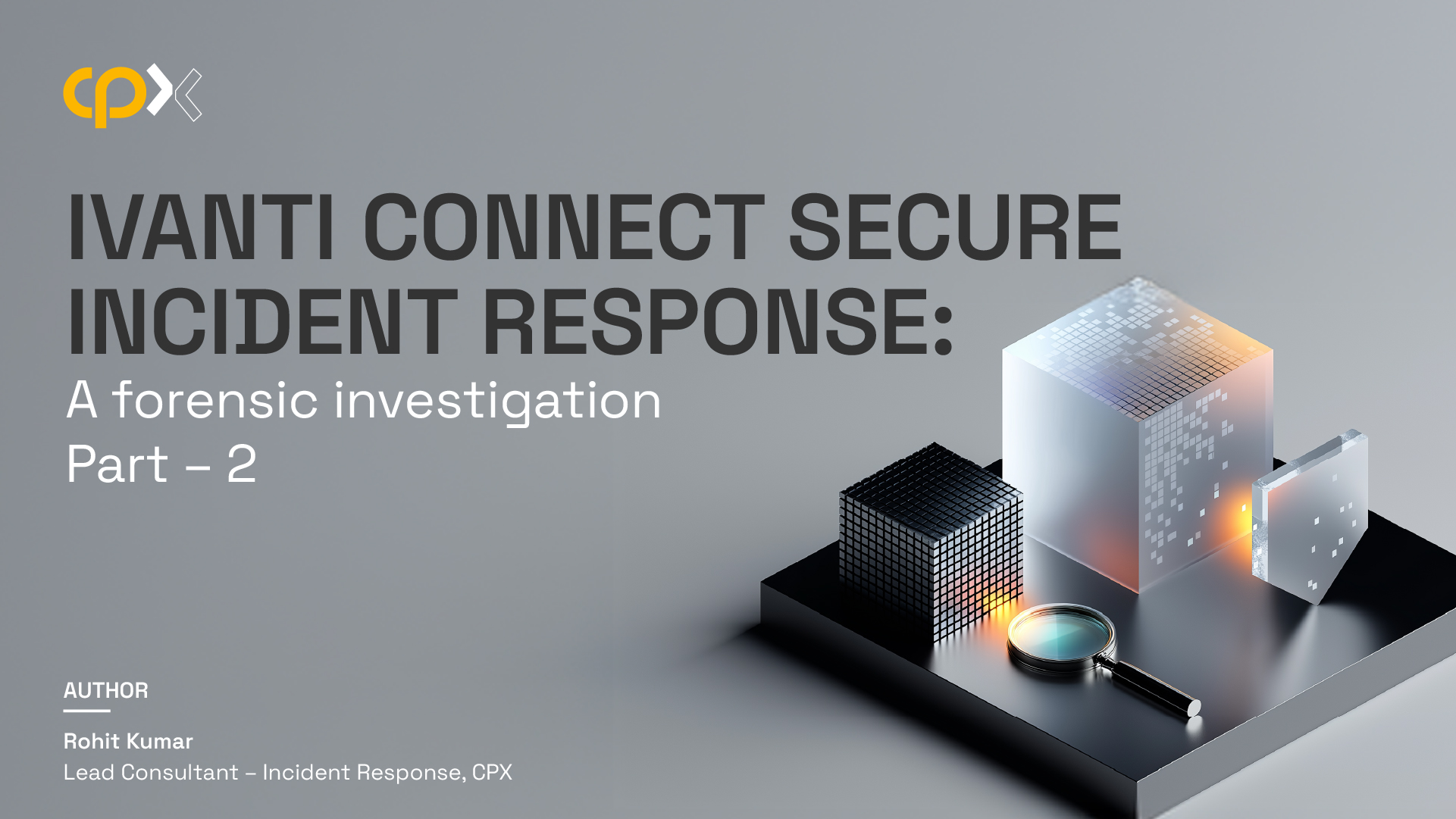
In Part I of our Ivanti forensics series, we explored how attackers exploit Ivanti Connect Secure vulnerabilities and how investigators can extract evidence from LILO‑based appliances. This second installment moves deeper into the investigation workflow.
As exploitation campaigns continue to accelerate, especially around CVE‑2025‑0282 and related vulnerabilities, incident responders increasingly need reliable, repeatable methods to analyze Ivanti Connect Secure devices that use GRUB and LUKS‑based full‑disk encryption.
This blog builds on the foundational concepts introduced in Part I and focuses on the next step in the forensic process: obtaining recovery access on GRUB‑based appliances, extracting and decrypting LUKS‑encrypted partitions, and preparing evidence for detailed offline analysis. GRUB‑based systems introduce unique challenges and opportunities for investigators, and understanding these nuances is essential for any team responding to Ivanti VPN compromises at scale.
GRUB based Ivanti Connect Secure appliances implement full disk encryption (data at rest) using Linux Unified Key Setup (LUKS). Unlike older LILO based systems that relied on custom encryption mechanisms, the LUKS encryption keys on GRUB based systems are stored on disk and can be extracted once recovery shell access is obtained. This allows investigators to decrypt encrypted partitions using standard Linux tooling.
At the GRUB bootloader, enter recovery mode and drop into a root shell:
init=//bin/sh
This provides a privileged shell in the early boot environment, prior to enforcing higher level security controls.
Copy the LUKS key material stored on the appliance:
cp /etc/lvmkey /tmp/luks_keys
This key file is required to decrypt the encrypted disk partitions offline.
Use the same network-based extraction steps described in Method 1, specifically:
• From Method 1 – Step 4: Network interface configuration on the appliance
• From Method 1 – Step 5: Netcat listener setup on the forensic collection host
• From Method 1 – Step 8: dd based raw extraction of encrypted block devices
These steps are reused to stream raw, encrypted LUKS partitions and the luks_keys from the appliance to the forensic collection host.
On the forensic workstation, decrypt the extracted partition using standard Linux tools:
cryptsetup luksOpen --key-file=luks_keys /dev/sdaX decrypted_partition
mount /dev/mapper/decrypted_partition /mnt/forensic_analysis
Once mounted, the decrypted filesystem can be examined using conventional forensic and incident response techniques.
In Part III of this series, we examine techniques for extracting the Ivanti snapshot, decrypting the acquired image, and preparing it for detailed forensic analysis.
Resources
This forensic investigation guide and vulnerability analysis incorporates research and tools developed by:
Ivanti/Pulse Secure Vulnerability Research
watchTowr Labs – Exploitation Walkthrough and Techniques: Ivanti Connect Secure RCE (CVE-2025-0282)
https://labs.watchtowr.com/exploitation-walkthrough-and-techniques-ivanti-connect-secure-rce-cve-2025-0282/#:~:text=Building%20The%20Exploit,for%20the%20readers%20at%20home
watchTowr Labs – CVE-2024-22024 (SAML XXE) Analysis
https://labs.watchtowr.com/are-we-now-part-of-ivanti/
Volexity – Active Exploitation of Ivanti Connect Secure VPNs
https://www.volexity.com/blog/2024/01/10/active-exploitation-of-ivanti-connect-secure-vpn/
Volexity – CVE-2023-46805 Authentication Bypass
https://www.cve.org/CVERecord?id=CVE-2023-46805
Northwave Security – Ivanti/Pulse Secure forensic tooling and analysis
https://northwave-cybersecurity.com/whitepapers-articles/investigating-a-possible-ivanti-compromise
Black Hat and historical context
Orange Tsai & Meh Chang – Infiltrating Corporate Intranet Like NSA (Black Hat USA 2019)
https://www.blackhat.com/us-19/briefings/schedule/#infiltrating-corporate-intranet-like-nsa-16202
https://www.youtube.com/watch?v=mKGq8z17Kd4
Web shell references
FireEye/Mandiant – China Chopper Web Shell Analysis
Breaking Down the China Chopper Web Shell - Part I |
Mandiant | Google Cloud Blog: https://cloud.google.com/blog/topics/threat-intelligence/breaking-down-china-chopper-web-shell-part-i
Breaking Down the China Chopper Web Shell - Part II
https://cloud.google.com/blog/topics/threat-intelligence/breaking-down-the-china-chopper-web-shell-part-ii
https://www.volexity.com/blog/2024/01/15/ivanti-connect-secure-vpn-exploitation-goes-global/
https://github.com/stephen-murcott/Ivanti-ICT-Snapshot-decryption


03 March, 2026
Evolving cyber threat landscape amid Middle East tensions
Read now
27 February, 2026
Moltbook: The rise of agent native AI and a new class of threats
Read now
20 February, 2026
Uncovering the Chinese APT Group .Net Malware Payload – Part 2
Read now
19 February, 2026
Uncovering the Chinese APT Group .Net Malware Payload – Part 1
Read now
12 February, 2026
Enabling visibility and monitoring for ICS networks: Fortifying c...
Read now

10 February, 2026
How to secure your Microsoft Exchange Hybrid Environment for 2026
Read now
10 February, 2026
How AI empowers Zero Trust Architecture in network security
Read now
14 January, 2026
Ivanti Connect Secure Forensics (Part 3): Integrity Checker Tool ...
Read now
09 January, 2026
Ivanti Connect Secure Incident Response Investigation: From explo...
Read now

26 December, 2025
Zero Trust Architecture: Principles, challenges, and best practices
Read now
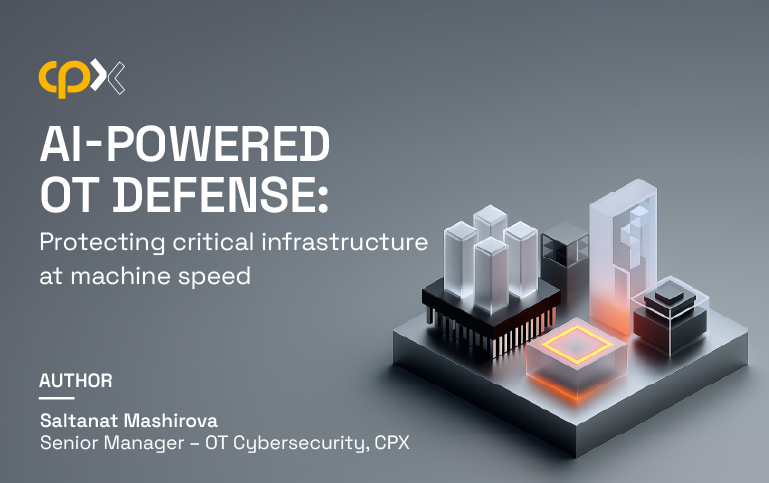
08 December, 2025
AI-powered OT cybersecurity: Securing critical infrastructure
Read now
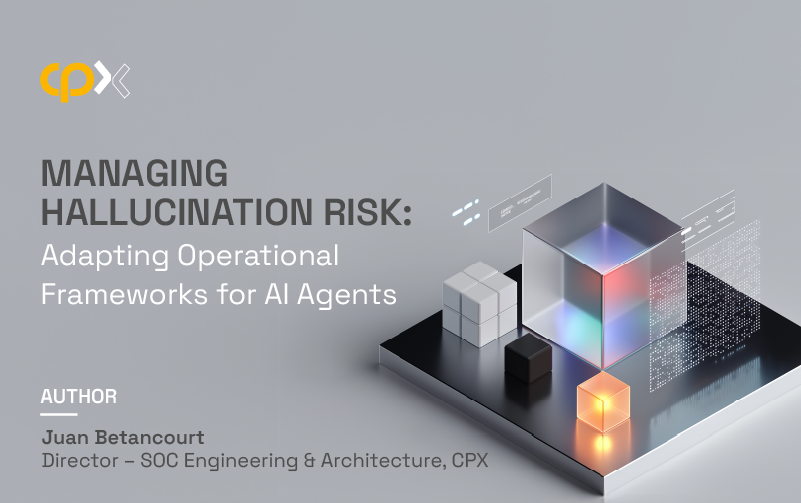
08 December, 2025
AI agents are scaling operations — is risk management ready?
Read now
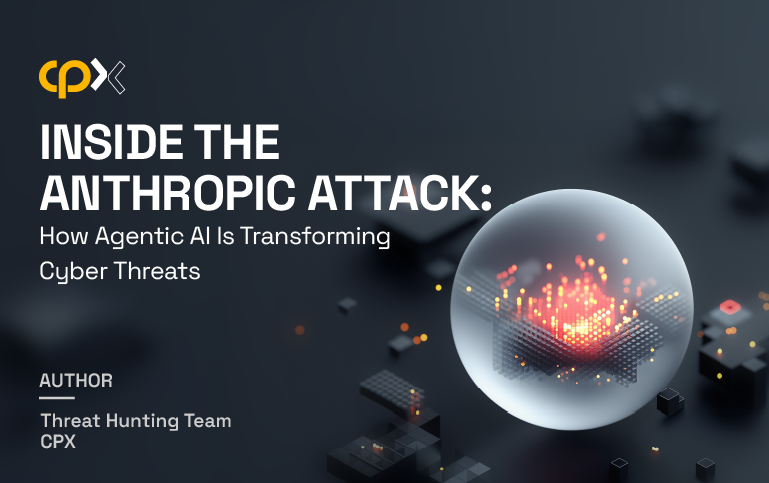
20 November, 2025
Unmasking a Modern Cyber Assault: Lessons from the Anthropic attack
Read now

02 October, 2025
Filtering the noise: A smarter approach to SCADA security
Read now

18 August, 2025
Detection Engineering Validation: Proven detections for modern SOCs
Read now

30 June, 2025
AI-driven cyber attacks: The rising threat in cybersecurity
Read now

29 May, 2025
How AI copilots in cybersecurity are redefining threat intelligence
Read now
10 April, 2025
Strengthening Azure DevSecOps: Closing gaps with third-party enha...
Read now
28 March, 2025
Oracle Cloud incident: Analyzing the breach and its impact
Read now
08 March, 2024
Enhancing physical security through CPS integration
Read now

20 July, 2023
Understanding Insecure Deserialization
Read now
©CPX 2026. All rights reserved. Privacy policy | Terms of use