

12 February, 2026
Operational Technology (OT) and Industrial Control Systems (ICS) play a critical role in modern industrial processes, from manufacturing to critical infrastructure management. But as cyber risks grow and operational environments modernize, ensuring the security and efficiency of these networks is paramount.
This article explores the importance of enabling network traffic visibility and monitoring in ICS environments and outlines different strategies to achieve it.
Operational Technology (OT) encompasses a wide range of systems and devices used to control industrial processes, including Supervisory Control and Data Acquisition (SCADA), Distributed Control Systems (DCS), and Programmable Logic Controllers (PLCs). Industrial Control Systems specifically manage and automate critical industrial processes such as power generation, manufacturing, and transportation. These technologies form the backbone of essential infrastructure sectors for any country.
The inherent challenges of ICS environments include their long lifecycles, reliance on proprietary protocols, and often outdated or unpatched software and hardware components. These characteristics make them attractive targets for cyberattacks.
Example: BlackEnergy malware: On December 23, 2015, this malware remotely compromised information systems of three energy distribution companies in Ukraine and temporarily disrupted the electricity supply to consumers.
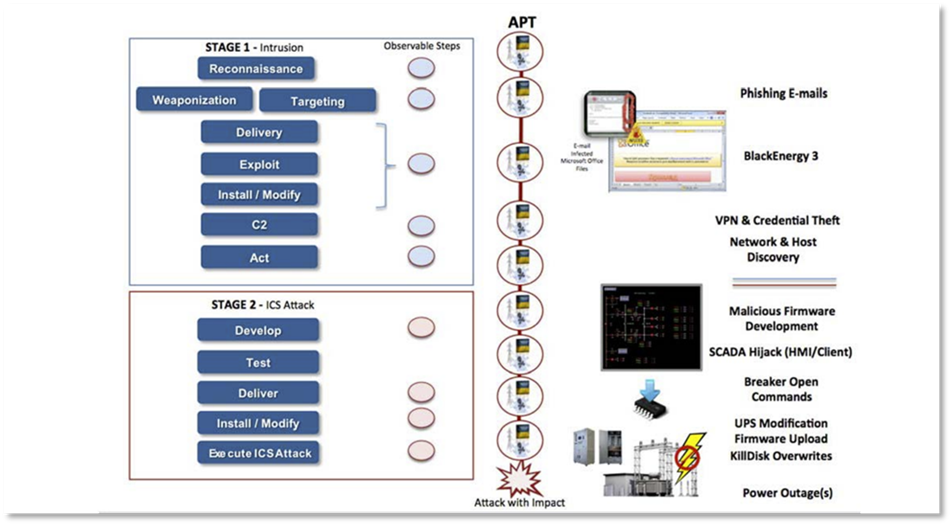
Figure 1: BlackEnergy attack flow mapping diagram
Real-time network traffic visibility is the ability to collect, review, and monitor data from every facet of an ICS environment continuously. This data encompasses information from sensors, controllers, actuators, and other industrial components. It allows plant operators and cybersecurity professionals to gain comprehensive insights into the state of security of the network and its components at any given moment, as well as checking for misconfigurations and helping troubleshoot non-security issues at the same time.
Use Case: In a smart grid scenario, real-time visibility empowers grid operators to monitor voltage levels, identify grid congestion, and predict potential failures. By continuously analysing data from sensors and substations, they can take proactive measures, such as rerouting power flows or remotely controlling equipment, to ensure reliable and efficient electricity distribution.
Intrusion detection and prevention systems are very important when it comes to safeguarding ICS environments. These systems perform automated or semi-automated analysis network traffic, looking for patterns indicative of cyberattacks or unauthorized access attempts. They can be tailored to recognize specific threats, including malware, Denial-of-Service (DoS) attacks, and Command and Control (C2) communication.
Behavioral analytics, powered by machine learning algorithms, play a pivotal role in identifying subtle anomalies that might go unnoticed with traditional security measures. For instance, in a chemical processing plant, these systems can learn the typical behavior of various components and raise alarms when deviations occur, such as unexpected temperature fluctuations in a reactor.
Network segmentation in ICS environments isn’t just about dividing a network into isolated segments and conduits as established under the Purdue architecture and the IEC 62443 standard; it should be treated as a holistic approach to security. It includes defining access controls, segmenting based on function and criticality, implementing stringent firewall rules, and adding security appliances.
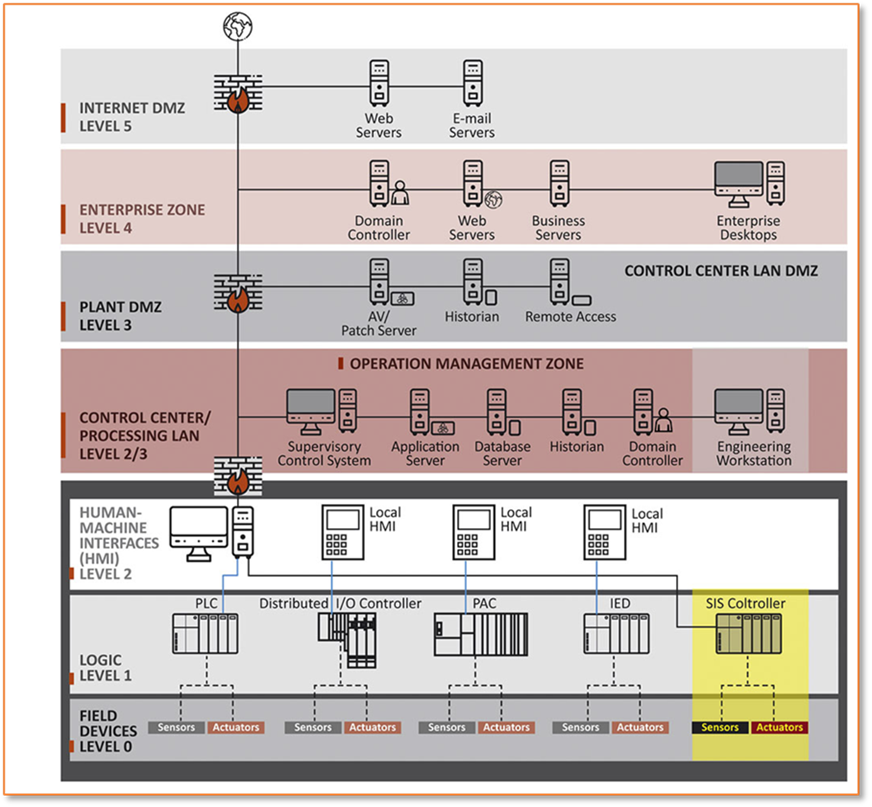
Figure 2: Purdue Enterprise Reference Architecture (PERA) Model
A purpose-built approach segmentation with monitoring security appliance can monitor the ICS environment, remove all unauthorised traffic, alert on anomalous traffic, and let the authorised traffic to pass through to enhance and allow greater visibility control at each of the ICS segmentation points.
Example: If Process A has a local HMI, the operator can set it up so that the HMI can only talk with Process A’s PLC, safety system, and RTU. Additionally, with the ICS monitoring security appliance, an operator can clearly define and approve authorized traffic between the HMI and the PLC, safety system, and RTU.
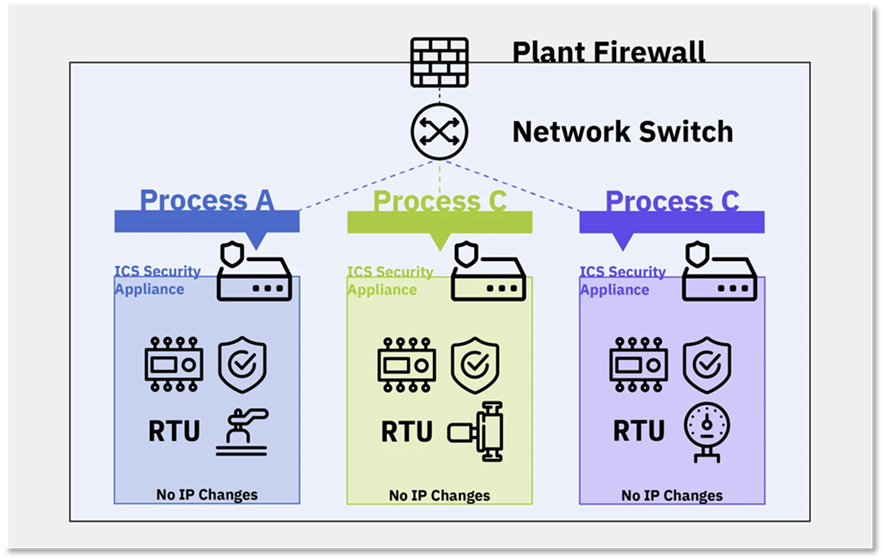
Figure 3: A purpose-built approach to ICS network ICS environment segmentation
Let’s take an example of a water treatment plant responsible for providing clean water to a major city. This facility relies on numerous OT systems to control pumps, valves, chemical dosing, and water quality monitoring. The criticality of uninterrupted water supply and the inherent vulnerabilities of OT systems require of robust cybersecurity measures to protect this facility and its systems.
The combined SIEM and NSM solution offers real-time monitoring and detection of cyber threats, ensuring rapid response to potential incidents. In addition, it also offers the following benefits:
In this scenario (Figure 4), the SIEM solution (in this case using EXABEAM) and NSM appliances work well together to secure the water treatment plant's OT network. This architecture not only enhances security but also provides the plant with security and monitoring architecture to respond effectively to cyber threats.
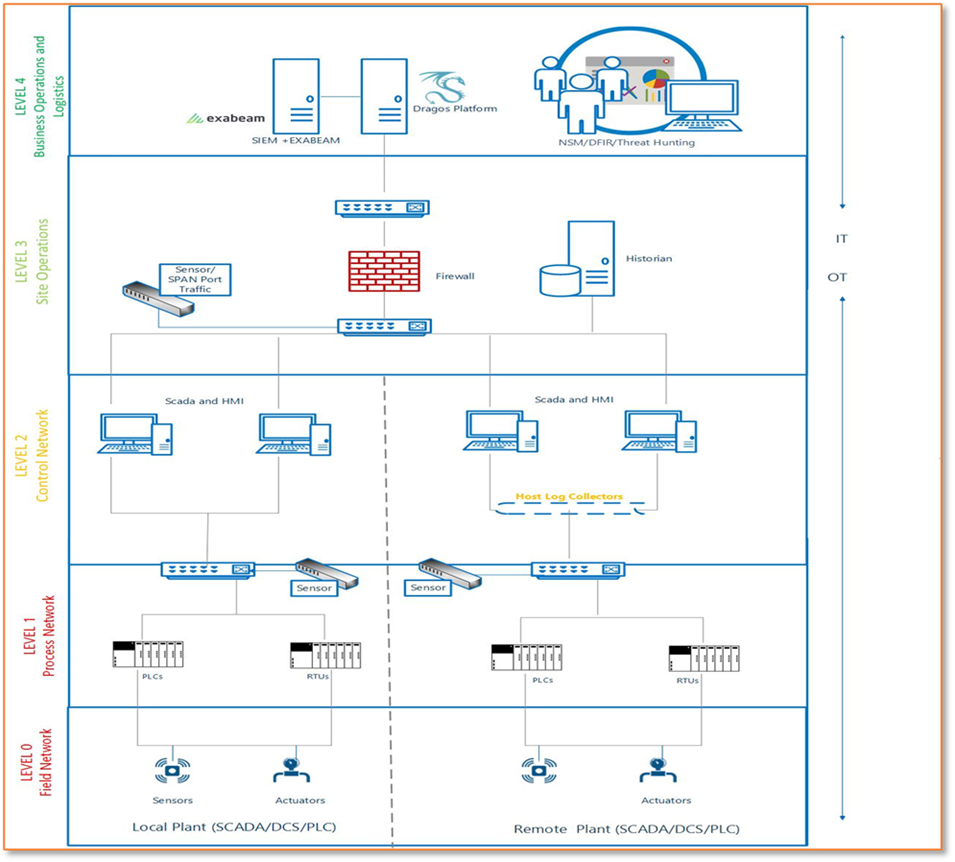
Figure 4: Architecture implementation to enable visibility and monitoring on ICS environment
This blog provides useful approaches for enabling visibility and monitoring on the ICS environments. CPX would like to emphasize that these practices should not be optional but they are imperative to ensure the security, efficiency, and compliance of critical infrastructure networks. As entities navigate the ever-evolving landscape of cyber threats and technological advancements, the integration of robust monitoring solutions remains an essential part for the resilience of our vital systems.
The article aims to serve as a resource for business owners, industry professionals, and cybersecurity experts, offering actionable strategies, real-world examples, and a vision of the future of ICS environment management.
References
https://www.opswat.com/blog/navigating-the-cybersecurity-landscape-of-ics-and-ot-networks-insights-and-solutions
https://nsarchive.gwu.edu/sites/default/files/documents/3891751/SANS-and-Electricity-Information-Sharing-and.pdf
https://cyble.com/blog/ot-security-good-practices/
https://www.dragos.com/blog/how-to-improve-ot-network-visibility/

23 March, 2026
Cyber resilience in an era of conflict: Why GCC organizations mus...
Read now
18 March, 2026
Crisis-driven Cyber Resilience: Why SOC and Threat Hunting are Mi...
Read now
09 March, 2026
Identity as the target: Resurgence of Microsoft 365 credential ha...
Read now

07 March, 2026
Evolving cyber threat landscape amid Middle East tensions
Read now
27 February, 2026
Moltbook: The rise of agent native AI and a new class of threats
Read now
20 February, 2026
Uncovering the Chinese APT Group .Net Malware Payload – Part 2
Read now
19 February, 2026
Uncovering the Chinese APT Group .Net Malware Payload – Part 1
Read now

10 February, 2026
How to secure your Microsoft Exchange Hybrid Environment for 2026
Read now
10 February, 2026
How AI empowers Zero Trust Architecture in network security
Read now
14 January, 2026
Ivanti Connect Secure Forensics (Part 3): Integrity Checker Tool ...
Read now
13 January, 2026
Ivanti Connect Secure Forensics (Part 2): GRUB-based LUKS Decrypt...
Read now
09 January, 2026
Ivanti Connect Secure Incident Response Investigation: From explo...
Read now

26 December, 2025
Zero Trust Architecture: Principles, challenges, and best practices
Read now
08 December, 2025
AI-powered OT cybersecurity: Securing critical infrastructure
Read now
08 December, 2025
AI agents are scaling operations — is risk management ready?
Read now
20 November, 2025
Unmasking a Modern Cyber Assault: Lessons from the Anthropic attack
Read now
02 October, 2025
Filtering the noise: A smarter approach to SCADA security
Read now

18 August, 2025
Detection Engineering Validation: Proven detections for modern SOCs
Read now
30 June, 2025
AI-driven cyber attacks: The rising threat in cybersecurity
Read now

29 May, 2025
How AI copilots in cybersecurity are redefining threat intelligence
Read now
10 April, 2025
Strengthening Azure DevSecOps: Closing gaps with third-party enha...
Read now
28 March, 2025
Oracle Cloud incident: Analyzing the breach and its impact
Read now
08 March, 2024
Enhancing physical security through CPS integration
Read now

20 July, 2023
Understanding Insecure Deserialization
Read now
©CPX 2026. All rights reserved. Privacy policy | Terms of use