

23 March, 2026
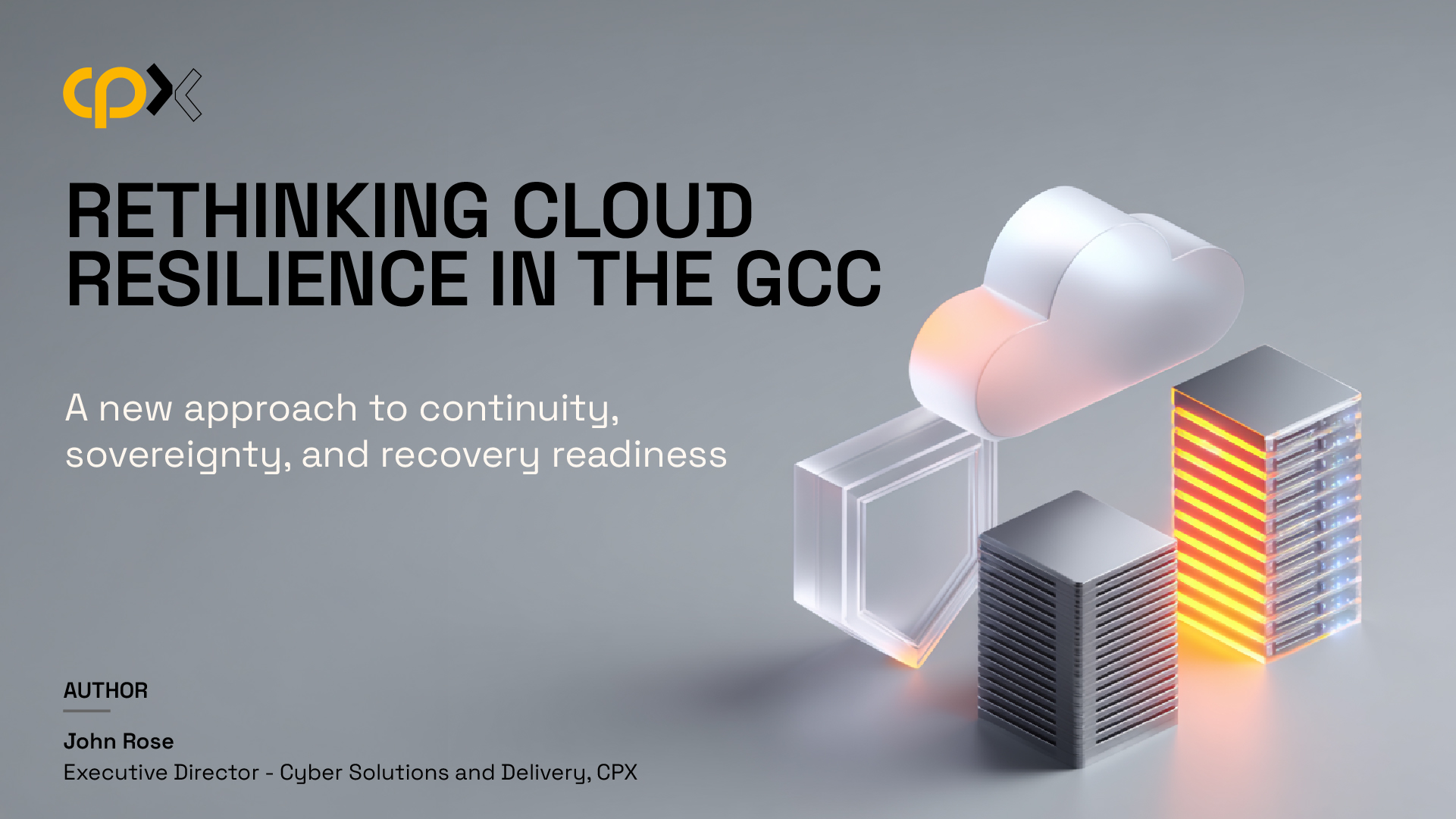
The regional conflict in the Middle East has pushed cyber resilience from a theoretical concern into an operational reality for organizations across the Gulf. Kinetic conflict, state‑sponsored cyber operations, and regional infrastructure dependencies are now converging in ways that directly threaten the availability of critical digital services.
Recent events have demonstrated how quickly these risks can materialize. Hyperscale cloud infrastructure in the region—including AWS data centers in the UAE and Bahrain—has been impacted by missile activity, while Microsoft cloud facilities have operated under elevated threat conditions. At the same time, Iranian cyber warfare capabilities remain among the most prolific and persistent in the region, targeting government, energy, financial services, and critical national infrastructure.
For organizations that rely heavily on cloud platforms, identity services, and always‑on digital channels, the implication is clear: regional conflict can now disrupt cloud availability, data access, and recovery assumptions simultaneously.
Cyber resilience preparedness is no longer a discretionary investment or a compliance exercise. It is a prerequisite for operational survival.
Traditional Business Impact Analyses (BIAs) have often been built on probabilistic models—estimating the likelihood of outages, cyber incidents, or provider failures in isolation. That approach no longer reflects today’s threat environment. Cyber, cyber‑kinetic, and geopolitical risks must now be treated as credible operating conditions, not low‑probability edge cases.
As a result, BIAs must be re‑evaluated under new threat exposures, explicitly accounting for:
Resilience decisions must be driven by business criticality under these conditions—not by historical uptime statistics or generic provider assurances.
For years, cloud Availability Zones (AZs) have been positioned as the foundation for resilience. While AZs remain valuable, they were never designed to address sovereign‑level disruption, regional conflict, or sustained geopolitical escalation.
Availability Zones typically:
In a conflict scenario, these shared dependencies can fail together. Power, connectivity, access to provider services, or even physical infrastructure can be disrupted in ways that AZ‑based architectures cannot absorb.
Relying on Availability Zones as the primary tenant of sovereign resilience is no longer sufficient when the threat model includes missile strikes, regional instability, and nation‑state cyber campaigns.
Organizations must now plan for scenarios that were previously considered extreme:
Addressing these scenarios may require new architectural and governance patterns, including:
These considerations challenge long‑standing assumptions about what “sovereign cloud” and “in‑country resilience” truly mean when physical and cyber risks converge.
In this environment, cyber resilience must be addressed deliberately and systematically. Organizations should focus on four immediate priorities:
Cyber resilience is no longer about optimizing availability—it is about ensuring continuity under adverse, contested conditions.
The regional threat landscape has fundamentally changed. Cloud outages, cyber operations, and physical disruption can now occur together, with cascading impact across sectors and borders.
Organizations that continue to rely on legacy resilience assumptions—such as zone‑level redundancy or best‑effort recovery—risk prolonged outages, regulatory exposure, and loss of trust. Those that proactively reframe resilience as a business‑led, threat‑informed capability will be better positioned to operate through uncertainty.
In today’s environment, cyber resilience preparedness is no longer optional. It is the cost of remaining operational.

18 March, 2026
Crisis-driven Cyber Resilience: Why SOC and Threat Hunting are Mi...
Read now
09 March, 2026
Identity as the target: Resurgence of Microsoft 365 credential ha...
Read now

07 March, 2026
Evolving cyber threat landscape amid Middle East tensions
Read now
27 February, 2026
Moltbook: The rise of agent native AI and a new class of threats
Read now
20 February, 2026
Uncovering the Chinese APT Group .Net Malware Payload – Part 2
Read now

19 February, 2026
Uncovering the Chinese APT Group .Net Malware Payload – Part 1
Read now
12 February, 2026
Enabling visibility and monitoring for ICS networks: Fortifying c...
Read now

10 February, 2026
How to secure your Microsoft Exchange Hybrid Environment for 2026
Read now
10 February, 2026
How AI empowers Zero Trust Architecture in network security
Read now
14 January, 2026
Ivanti Connect Secure Forensics (Part 3): Integrity Checker Tool ...
Read now
13 January, 2026
Ivanti Connect Secure Forensics (Part 2): GRUB-based LUKS Decrypt...
Read now
09 January, 2026
Ivanti Connect Secure Incident Response Investigation: From explo...
Read now

26 December, 2025
Zero Trust Architecture: Principles, challenges, and best practices
Read now
08 December, 2025
AI-powered OT cybersecurity: Securing critical infrastructure
Read now
08 December, 2025
AI agents are scaling operations — is risk management ready?
Read now
20 November, 2025
Unmasking a Modern Cyber Assault: Lessons from the Anthropic attack
Read now
02 October, 2025
Filtering the noise: A smarter approach to SCADA security
Read now

18 August, 2025
Detection Engineering Validation: Proven detections for modern SOCs
Read now

30 June, 2025
AI-driven cyber attacks: The rising threat in cybersecurity
Read now

29 May, 2025
How AI copilots in cybersecurity are redefining threat intelligence
Read now

10 April, 2025
Strengthening Azure DevSecOps: Closing gaps with third-party enha...
Read now
28 March, 2025
Oracle Cloud incident: Analyzing the breach and its impact
Read now
08 March, 2024
Enhancing physical security through CPS integration
Read now

20 July, 2023
Understanding Insecure Deserialization
Read now
©CPX 2026. All rights reserved. Privacy policy | Terms of use