

18 March, 2026
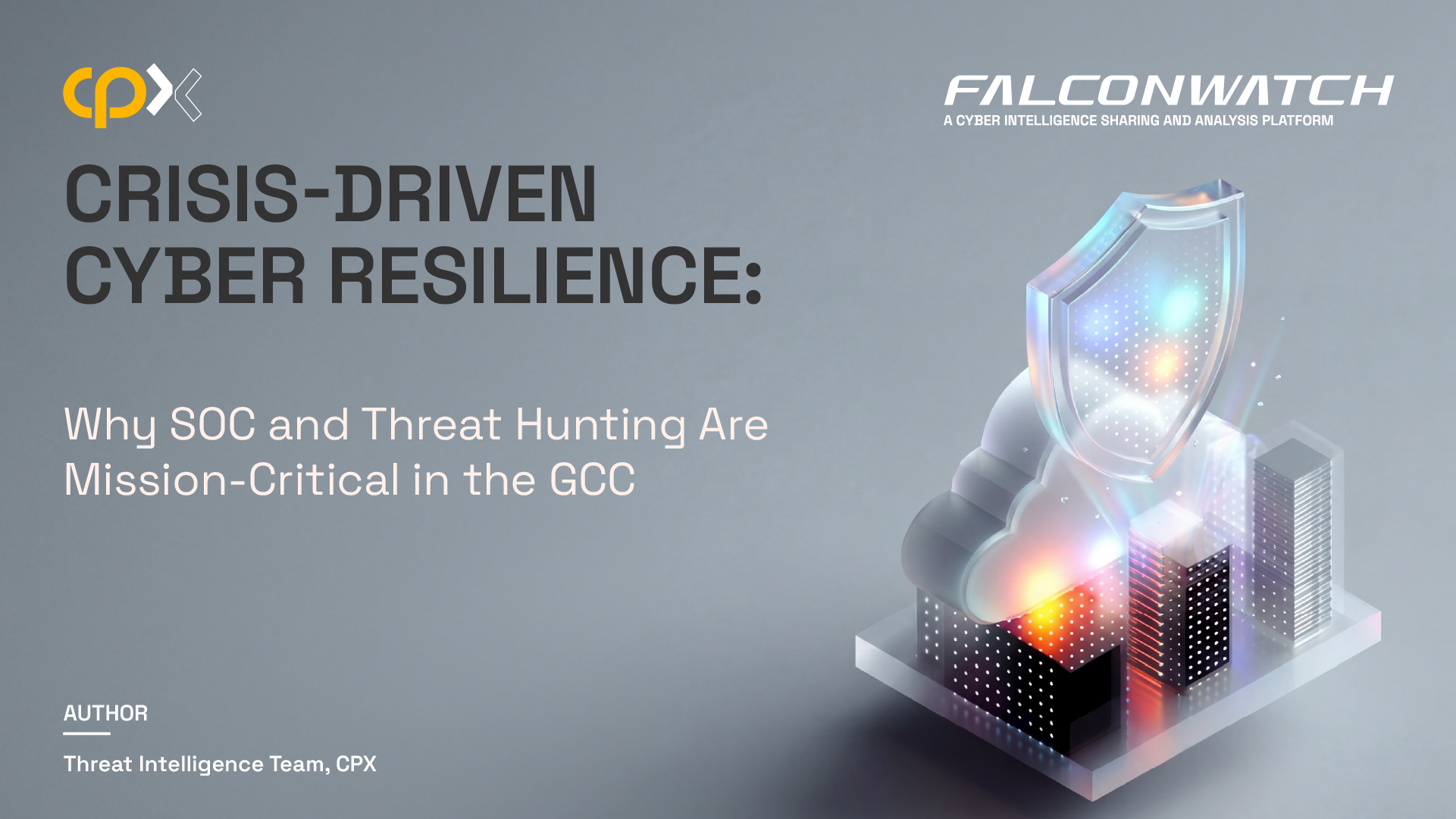
The evolving Middle East regional conflict has transitioned from a localized security concern into a region‑wide operational risk for organizations across the Gulf Cooperation Council (GCC). Recent events have demonstrated that cloud, cyber, and digital‑service resilience assumptions no longer hold true under conditions of sustained geopolitical escalation.
This is not a theoretical risk. Physical strikes, telecommunications fragility, and elevated cyber activity have converged to expose systemic dependencies across cloud platforms, identity services, networks, and data‑center infrastructure—dependencies that many enterprises were not designed to withstand simultaneously.
Sector: Cloud infrastructure, banking, payments, consumer apps
Iranian drone strikes directly impacted hyperscale cloud infrastructure in the Gulf, striking two data centers in the UAE and damaging a third facility in Bahrain, resulting in a significant regional cloud disruption. The attacks caused two of the three availability zones in the region to go offline, effectively breaking the built‑in redundancy model, which is designed to withstand the loss of only a single zone. Subsequent power shutdowns, fire-suppression activation, and cooling system damage led to prolonged service degradation, triggering widespread outages across banking, payments, consumer applications, and enterprise services.
Impact
The outage cascaded across banking, payments, consumer applications, and enterprise services dependent on the cloud services. Retail and corporate banking services, digital payment platforms, and internal operational systems experienced service disruption.
In several cases, full-service restoration required more than a week, as organizations migrated workloads to alternate regions and restored critical data from backups due to sustained regional unavailability.
When availability zones are no longer enough – This hyperscale disruption validated a hard truth: single‑region and availability‑zone redundancy do not guarantee continuity under kinetic and infrastructure‑level disruption. In multiple cases, organizations experienced prolonged outages that exceeded a week, with recovery dependent on emergency workload migration and restoration from backups.
A second major hyperscale data center failure would push regional disruption beyond isolated outages into systemic service degradation. Emergency migrations would collide with capacity limits across alternate regions and providers, slowing recovery and extending outages from days into weeks. Identity platforms, shared SaaS services, and security control planes would face instability, while large-scale backup restores would strain bandwidth and increase the risk of partial or failed recovery.
Under these conditions, network congestion, routing fragility and compute unavailability become the dominant constraints. At this stage, cloud availability shifts from an assumed utility to a contested resource, exposing organizations that lack pre-tested migration capability, independently recoverable data, and executive-led crisis execution.
Data survival and integrity are the real continuity metric. In crisis conditions, platform resilience matters less than data survivability. At the current elevated threat level, organizations must operate on the assumption that primary systems may become unavailable without warning, making recovery wholly dependent on the integrity, isolation, and accessibility of backups. Organizations should prepare for immutable backup services and recovery options during crisis.
Critically, backup environments themselves are increasingly attractive targets. Destructive attacks, ransomware operations, and privileged access abuse are designed to eliminate recovery options, not just disrupt services. This reality demands validated restore testing, immutable storage and backups, geographic separation, SOC‑level monitoring of backup platforms and not just periodic compliance checks.
The expanding threat surface of remote operations – Sustained remote operations are now a realistic requirement across the GCC under elevated threat conditions. This shift significantly expands the attack surface, particularly through identity infrastructure, VPN/VDI services, and unmanaged endpoints.
Identity systems have become the operational backbone of crisis continuity. Any weakness in MFA coverage, conditional access enforcement, or break‑glass procedures directly translates into business risk. Organizations must assume that credential abuse and valid‑account compromise will be the primary initial access vector during regional escalation.
Nation‑state and hacktivist activity across the GCC has shown a clear operational focus: high‑impact business disruption rather than stealthy persistence and sabotaging data and systems being the primary goal.
SOC teams are required to shift from passive monitoring to proactive threat hunting, prioritizing exploitation of public‑facing applications, abuse of external remote services, valid‑account compromise, ransomware behaviors, and application‑layer command‑and‑control traffic.
This requires more than tools. It requires 24/7 staffing, reduced alert thresholds, structured shift handovers, and intelligence‑driven hunt campaigns mapped to the current regional threat context.
Telecommunications fragility—particularly dependency on conflict‑adjacent submarine cable routes—has emerged as a critical but often overlooked risk. Network routing instability, bandwidth congestion, and peering disruptions can severely constrain recovery efforts, even when backup systems and alternate cloud regions are available.
Organizations must actively validate ISP failover, physical path diversity, alternative terrestrial or satellite routes, and crisis‑mode SLAs. Connectivity resilience is now inseparable from cyber resilience.
GCC crisis governance & decision model – During elevated regional threat conditions, crisis management must operate under a clearly defined governance and decision model. Effective crisis execution in GCC organizations depends on explicit ownership, rapid decision rights, and executive-level risk acceptance.
A standing Crisis Management team must be activated during declared crisis conditions, with representation from:
The Crisis Management team holds authority to:
Crisis readiness across cloud operations, identity systems, backup and recovery, and remote-work enablement must be treated as an executive-owned Business Continuity capability. This aligns with national BCM expectations such as NCEMA 7000 in the UAE, where preparedness is validated through documented governance, executive accountability, and recurring drills rather than static plans.
In crisis situations, crisis decisions must be reviewed daily at the executive level while the elevated threat posture persists. Any inability to meet defined recovery objectives for critical services must be treated as an operational risk requiring a leadership decision, not a technical exception.
During sustained regional disruption, operational impact is often amplified by decision latency rather than technical failure. Organizations must predefine escalation triggers, delegated authority (DOA), exception pathways, and risk acceptance thresholds before a crisis occurs. These mechanisms must align with internal governance models and regulator expectations, enabling rapid executive approval of workload migrations, recovery sequencing, RTO/RPO deviations, and emergency operating models—without ad-hoc deliberation during disruption.
Crisis communications & stakeholder management – Effective crisis management requires pre‑approved communication pathways aligned with legal and regulatory obligations.
Organizations should maintain:
Communication delays, unclear messaging, or inconsistent updates can amplify operational impact and reputational risk. Crisis communication plays a pivotal role at the forefront of the security governance decision-making process and is vital for maintaining organizational continuity. In the current situation, organizations should be prepared to address and deliver communications to concerned parties in a timely manner and avoid business reputation loss or regulatory fines.
Business continuity lens (service‑first)Crisis response actions must be driven by business service criticality, not by system or platform availability alone.
Technology recovery activities—including cloud migration, backup restoration, and SOC response—must be explicitly aligned with business continuity priorities.
Organizations should classify:
Crisis execution priorities, recovery sequencing, and resource allocation must align with this classification.
Where recovery timelines for Tier‑1 services cannot be met, escalation to executive leadership is mandatory for risk acceptance or alternate operating decisions.
Under crisis conditions, the Security Operations Center (SOC) serves as a continuity‑enabling function, not solely a detection capability.
SOC responsibilities during crisis include:
SOC escalation thresholds must be aligned with business impact, not alert volume. Indicators that affect recovery confidence, identity availability, backup integrity, or remote‑operations stability must be escalated as continuity risks, not handled as isolated security incidents.
During crisis conditions, it is critical to distinguish responsibilities:
These functions must operate in parallel with Business Continuity providing overall prioritization and authority. Security and IT teams execute recovery actions, but continuity decisions such as service degradation acceptance or alternate operating models, remain business‑led.
Sovereign & portable infrastructure – A strategic operating model for GCC enterprises, this marks a strategic inflection point. Cloud workload migration is no longer an architectural optimization—it is now a crisis‑execution capability that must be governed, tested, and owned at the executive level.
Multi-region architecture and migration readiness must be explicitly aligned with national cloud security and data sovereignty requirements. This includes clear articulation of data-location constraints, portability guarantees, approved contingency regions, and regulator-aligned exit and recovery expectations. Crisis time workload movement must operate within preapproved sovereign boundaries—not negotiated during disruption.
Organizations should consider hosting systems and services in a sovereign portable infrastructure where agreements between governments extend data sovereignty outside a country, allowing international resilience with data protection and control. This resilience model can be bidirectional, enabling the GCC to leverage geographic redundancy in alternate partnered countries and vice versa.
One such infrastructure was launched by G42, the Digital Embassies framework and Greenshield. This is a new sovereign operating model that enables nations to deploy artificial intelligence securely and at scale while maintaining full legal authority and control over their data, systems, and policies regardless of where infrastructure is located.
The GCC threat environment has changed. Cloud outages, cyber operations, and physical infrastructure disruption can now occur concurrently, with cascading regional impact. Organizations that continue to rely on legacy assumptions of provider resilience, zone redundancy, or best‑effort recovery will face prolonged outages and reputational damage.
Under current elevated threats and risks, necessity demands tested migration capability, validated backups, identity‑centric security, hardened remote operations, and continuous executive oversight. Until the regional threat posture meaningfully de‑escalates, sustained heightened readiness is no longer optional—it is the cost of operational survival.
Immediate action is required from IT leadership, security teams, and business continuity owners. All mitigations in this plan should be operationally validated within 48–72 hours.
|
# |
Action |
Owner |
Timeline |
Priority |
|
1 |
Activate 24/7 SOC staffing and reduce alert sensitivity thresholds |
SOC Manager / CISO |
Immediate |
CRITICAL |
|
2 |
Integrate GCC/Middle East conflict-specific threat intelligence feeds into SIEM and activate SOC watchlists |
Threat Intelligence Lead / SOC |
0–24 hrs |
CRITICAL |
|
3 |
Emergency patch deployment for all critical/high CVEs |
Infrastructure Lead |
0–24 hrs |
CRITICAL |
|
4 |
Notify primary and secondary Internet Service Providers — activate crisis mode SLA and confirm escalation contacts |
IT Operations / Vendor Management |
0–24 hrs |
CRITICAL |
|
5 |
Engage Microsoft Account Manager — crisis posture notification and service health monitoring activation |
Cloud / Infrastructure Lead |
0–24 hrs |
CRITICAL |
|
6 |
Review Multi Factor Authentication enrollment completeness for all users; implement Geo Restrictions through Conditional Access policies |
Identity / IAM Team |
0–24 hrs |
HIGH |
|
7 |
Test identity break-glass access, PIM |
Identity / IAM Lead |
0–24 hrs |
HIGH |
|
8 |
Review remote-working infrastructure capacity for 100% remote workforce; initiate emergency uplift if required |
IT Operations |
0–24 hrs |
HIGH |
|
9 |
Execute controlled backup restore tests |
Backup & Infrastructure Lead / CISO |
0–48 hrs |
CRITICAL |
|
10 |
Validate backup architecture resilience — geographic separation, provider independence, immutability, and privileged access controls |
Backup & Security Architecture |
0–48 hrs |
HIGH |
|
11 |
Conduct a complete device inventory to identify employees without portable managed devices. |
Endpoint Security |
0–48 hrs |
HIGH |
|
12 |
Begin provisioning BYOD MDM enrollment if shortage of new devices |
IT Helpdesk / Operations |
0–48 hrs |
HIGH |
|
13 |
Validate data center monitoring - UPS, generator, cooling, physical security |
Data Center / Facilities |
0–48 hrs |
HIGH |
|
14 |
Obtain assurance from colocation/data-center providers covering power, cooling, fuel, physical security, and crisis posture |
Data Center / Facilities Lead |
0–48 hrs |
HIGH |
|
15 |
Launch proactive threat-hunting campaign against priority TTPs |
SOC / Threat Intelligence |
0–48 hrs |
HIGH |
|
16 |
Validate procedures for rapid isolation of compromised systems prior to restoration to prevent re-infection or data re-corruption |
IR Lead / SOC Manager |
0–48 hrs |
HIGH |
|
17 |
Produce executive-level backup & recovery assurance report related to last backup, restore test status, RTO/RPO gaps and risk acceptances |
CISO / Infrastructure Lead |
0–48 hrs |
HIGH |
|
18 |
Perform non-disruptive migration dry run or re-deployment validation for Tier-1 workloads to pre-designated alternate regions after regulatory approvals/exceptions; validate configs, IAM, networking, logging |
Cloud Platform Lead |
0–72 hrs |
CRITICAL |
|
19 |
Test ISP failover between primary and secondary connectivity at all critical sites |
Network Team |
0–72 hrs |
HIGH |
|
20 |
Confirm DFIR retainer availability; test out-of-band communication channels |
CISO / IR Lead |
0–72 hrs |
MEDIUM |
|
21 |
Review and update all IR playbooks for remote-operations crisis scenarios |
SOC Manager |
0–72 hrs |
MEDIUM |
|
22 |
Validate business continuity owners for Tier-1 services and confirm manual workarounds under outage conditions |
Business Continuity Manager |
0–72 hrs |
MEDIUM |
|
23 |
Prepare pre-approved internal and external crisis communication templates aligned with legal/regulatory requirements |
Corporate Communications / Legal / CISO |
0–72 hrs |
MEDIUM |
|
24 |
Establish daily vendor review cadence during current elevated threat period |
IT Operations |
Ongoing |
MEDIUM |
The above actions should be executed to validate resilience, ensure continuity, and reduce risk exposure under the current elevated regional threat posture. These actions are precautionary and readiness focused and need to be adjusted according to operational and business priority.
The measures outlined in this plan can be directly mapped to national cybersecurity control baselines across the region—including the UAE Information Assurance Standard, KSA Essential Cybersecurity Controls, and Qatar NISCF—supporting consistent assurance, audit readiness, and smoother regulatory engagement during periods of elevated risk.

23 March, 2026
Cyber resilience in an era of conflict: Why GCC organizations mus...
Read now
09 March, 2026
Identity as the target: Resurgence of Microsoft 365 credential ha...
Read now

07 March, 2026
Evolving cyber threat landscape amid Middle East tensions
Read now
27 February, 2026
Moltbook: The rise of agent native AI and a new class of threats
Read now
20 February, 2026
Uncovering the Chinese APT Group .Net Malware Payload – Part 2
Read now
19 February, 2026
Uncovering the Chinese APT Group .Net Malware Payload – Part 1
Read now
12 February, 2026
Enabling visibility and monitoring for ICS networks: Fortifying c...
Read now

10 February, 2026
How to secure your Microsoft Exchange Hybrid Environment for 2026
Read now
10 February, 2026
How AI empowers Zero Trust Architecture in network security
Read now
14 January, 2026
Ivanti Connect Secure Forensics (Part 3): Integrity Checker Tool ...
Read now
13 January, 2026
Ivanti Connect Secure Forensics (Part 2): GRUB-based LUKS Decrypt...
Read now
09 January, 2026
Ivanti Connect Secure Incident Response Investigation: From explo...
Read now

26 December, 2025
Zero Trust Architecture: Principles, challenges, and best practices
Read now
08 December, 2025
AI-powered OT cybersecurity: Securing critical infrastructure
Read now
08 December, 2025
AI agents are scaling operations — is risk management ready?
Read now
20 November, 2025
Unmasking a Modern Cyber Assault: Lessons from the Anthropic attack
Read now
02 October, 2025
Filtering the noise: A smarter approach to SCADA security
Read now

18 August, 2025
Detection Engineering Validation: Proven detections for modern SOCs
Read now

30 June, 2025
AI-driven cyber attacks: The rising threat in cybersecurity
Read now

29 May, 2025
How AI copilots in cybersecurity are redefining threat intelligence
Read now
10 April, 2025
Strengthening Azure DevSecOps: Closing gaps with third-party enha...
Read now
28 March, 2025
Oracle Cloud incident: Analyzing the breach and its impact
Read now
08 March, 2024
Enhancing physical security through CPS integration
Read now

20 July, 2023
Understanding Insecure Deserialization
Read now
©CPX 2026. All rights reserved. Privacy policy | Terms of use